
Let’s address this directly: surfing has no weight limit, no body type requirement, and no fitness threshold you need to clear before you’re “allowed” to paddle out. What surfing actually requires is the right board for your body — and that’s not opinion, it’s physics. Get the volume right, and a heavier rider will often catch waves more easily than a lighter one, not less. Here’s exactly how that works, and where in Bali to put it into practice.
It’s Not About Fitness — It’s About Displacement
Every surfboard floats according to a simple physical principle: volume, measured in liters of water displacement. A board with enough volume for your body weight rides high on the surface, glides efficiently, and lets you catch waves with less effort. A board with too little volume for your weight sits low, paddles sluggishly, and makes standing up genuinely harder — regardless of how fit or experienced you are.
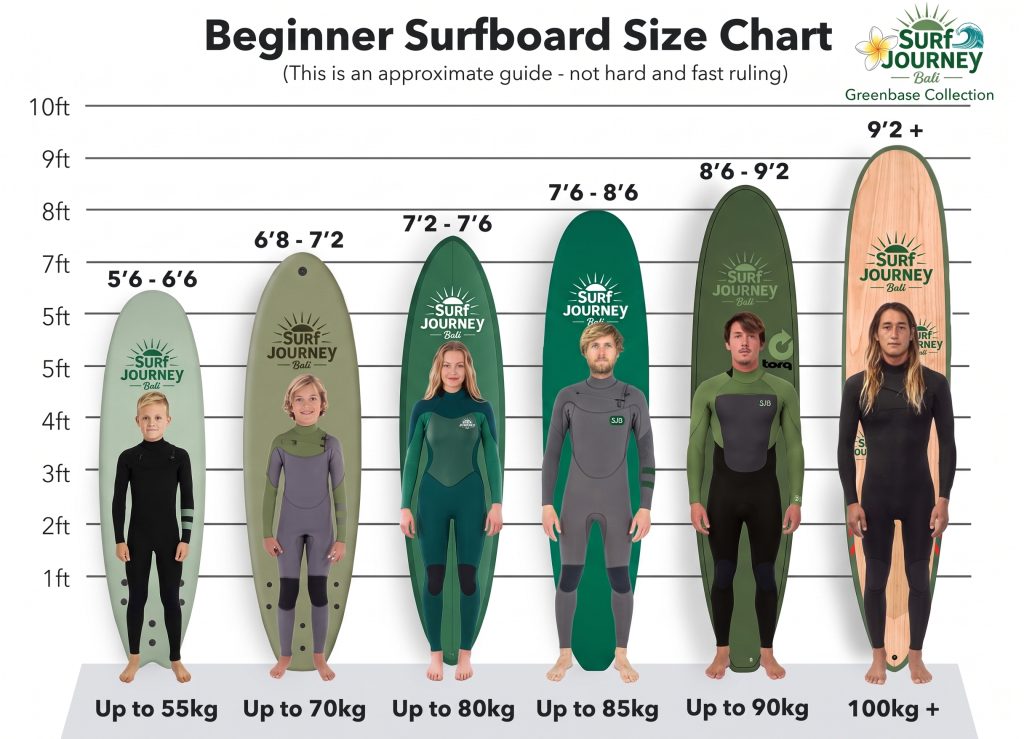
This is exactly why coaches size boards by body mass, not by “beginner” as a vague category. Here’s a sample of how volume scales for beginner surfers as body weight increases:
| Body Weight | Recommended Beginner Volume |
| 154 lbs / 70 kg | 50 L |
| 176 lbs / 80 kg | 58 L |
| 198 lbs / 90 kg | 64 L |
| 220 lbs / 100 kg | 72 L |
| 243 lbs / 110 kg | 80 L |
Notice the pattern: as weight goes up, so does the recommended volume — proportionally. A properly sized board for a 100 kg beginner isn’t a compromise or a “special” board. It’s simply the correct piece of equipment, exactly the same way a 50-liter board is correct for a lighter beginner. Nobody looks twice at either one.
Why More Volume Is an Advantage, Not a Workaround
Here’s the part that tends to surprise people: extra volume doesn’t just accommodate a heavier rider, it actively helps you learn faster. A higher-volume board sits higher in the water, catches waves earlier and with less paddle effort, and provides a wider, more stable platform for those early, wobbly pop-up attempts. Heavier riders on correctly sized boards often out-paddle lighter surfers on undersized boards without even trying — because the physics is simply working in their favor instead of against them.
The Right Board Shape
Volume is only half the equation — shape matters too, and the good news is that the shape best suited to a heavier rider is also the standard beginner board:
Soft-Top Foam Longboards (8’0″ to 9’0″+): Wide, rounded outlines with a flat entry rocker and full, buoyant rails. This shape is specifically engineered to maximize surface area and float, which naturally pairs well with higher body weight. It’s the same board every beginner starts on — it just needs to be sized with proportionally higher volume for a heavier frame.
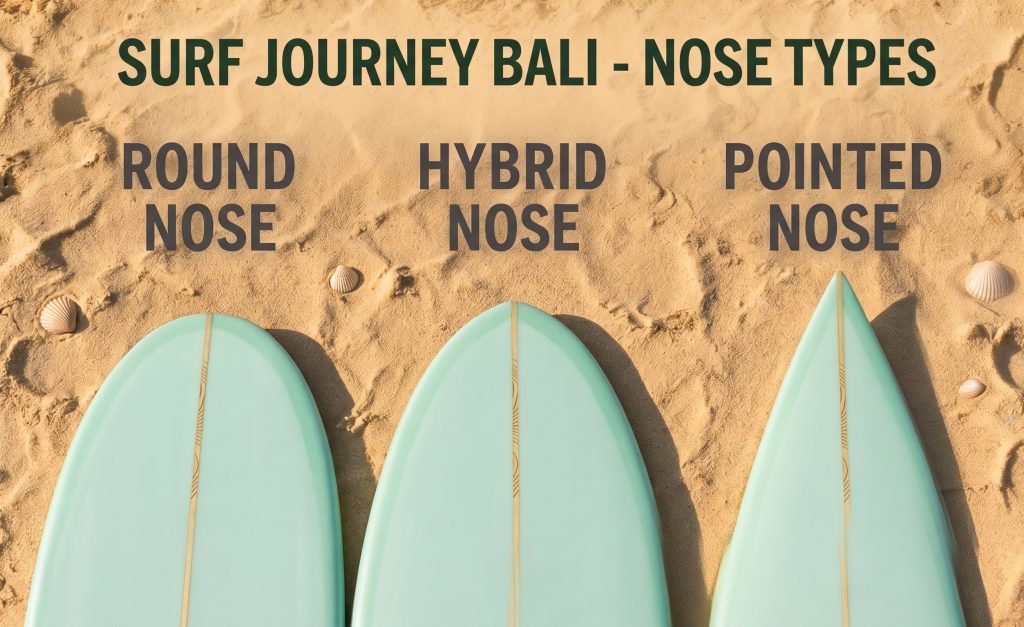
As your skill develops, the transition path is identical to any other surfer’s: moving toward funboards and mid-lengths (6’8″ to 7’6″) once you’re consistently catching green waves, and eventually smaller, more responsive boards as your technique advances. Your starting volume is simply calibrated correctly from day one.
Best Bali Spots for Building Confidence
Board volume is only useful if you’re surfing it on the right kind of wave. Fast, steep, hollow waves are demanding for any beginner — but they’re a particularly poor match for a higher-volume board, which wants space and time to plane and turn rather than a sudden, critical drop. The good news is that Bali’s best beginner spots are exactly the slow, forgiving, rolling waves that let a bigger board do what it does best:
All three spots share the same quality that matters most here: time. Slow, rolling waves give you the space to paddle into position, plane early on a higher-volume board, and stand up without being rushed by a fast, closing section.
The Bottom Line
There’s no separate “heavy rider” path in surfing — there’s just the correct equipment for your body, exactly like every other surfer needs. Get your board volume right, choose a forgiving, slow-rolling break, and the physics genuinely works in your favor. The only real requirement to start surfing is showing up.
Tell us your height and weight when you book, and we’ll make sure the board you’re handed on day one is sized exactly right — no guessing, no awkward conversations, just the correct equipment for you.

Yosua is a surf enthusiast with over 5 years of chasing waves across Bali’s iconic coastlines. From West coast to East coast of Bali, he’s spent years exploring what makes Bali one of the world’s greatest surf destinations. Through Surf Journey Bali, Yosua shares honest guides, local tips, and surf travel insights to help both beginners and seasoned wave-riders make the most of their Bali surf experience.