

Setting Expectations for Your Balinese Surfing Debut
With its warm tropical waters and world-renowned swells, Bali is the ultimate destination to learn how to ride a wave. However, the sheer volume of choices—from chaotic west coast beach breaks to quiet eastern reef passes—can be entirely overwhelming for a newcomer.
Before you wax up a board and run headfirst into the Indian Ocean, there are a few fundamental realities you must understand about this magnificent island. If you are planning to book surf lessons bali, here is absolutely everything you need to know before you paddle out.
The Seasons Dictate Where You Should Surf
Bali’s surfing landscape is firmly categorised into two main seasons, and knowing the difference is crucial for a successful trip.
- The Dry Season (May to October): During these months, the trade winds blow offshore on the West Coast (Kuta, Canggu, Seminyak, Uluwatu). This is when the famous left-hand reef breaks come to life.
- The Wet Season (November to April): The winds shift entirely. The West Coast becomes onshore and messy, whilst the East Coast (Nusa Dua, Sanur, Serangan) turns into an offshore paradise.
When you book premium bali surf lessons, your instructor will act as your seasonal navigator, ensuring you are always on the side of the island with the cleanest, safest waves.
Demystifying the Reef Break
One of the most common anxieties for beginners is the prospect of surfing over coral. Unlike many European or Australian beginner waves which break over sand, the majority of high-quality Balinese waves break over reef.
Whilst this sounds intimidating, it is actually a massive advantage for learning. A reef is stationary, meaning the wave breaks in the exact same spot with incredible predictability. The golden rule for beginner surf lessons bali is to simply surf at mid-to-high tide. This provides a deep, protective cushion of water over the coral, entirely mitigating the risk while offering you a perfectly peeling wave.
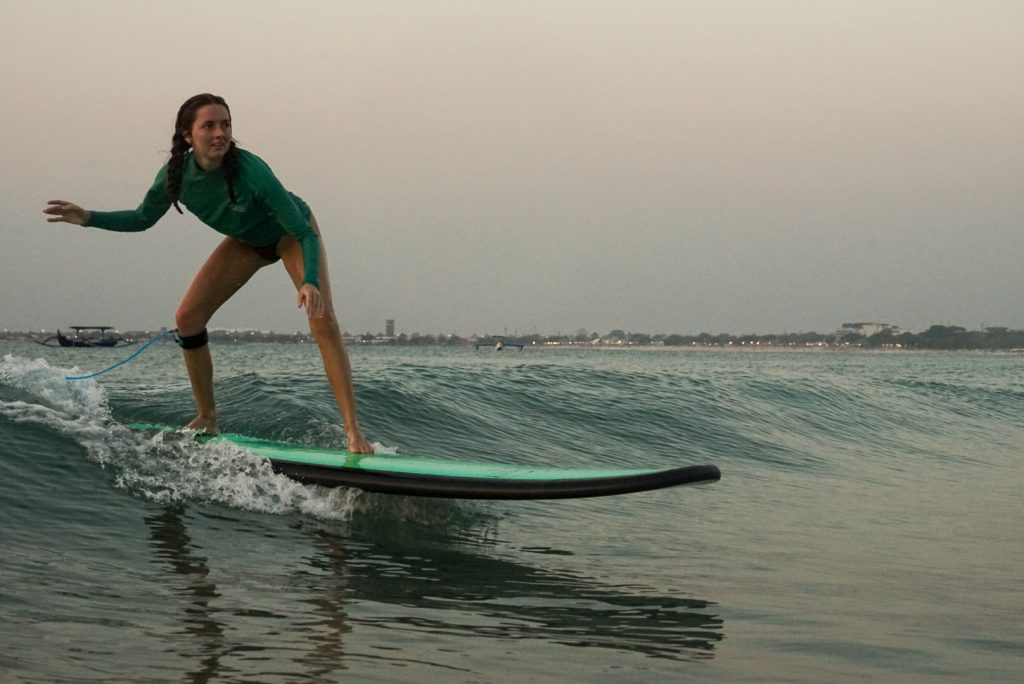
Not All Surf Schools Are Created Equal
Walking down Kuta Beach, you will be bombarded with offers for cheap, on-the-spot lessons. While tempting, these mass-market operations often pack students into huge groups. You will receive minimal feedback, and safety is often an afterthought.
If you are serious about actually learning the mechanics of the sport, seeking out private surf lessons bali is non-negotiable. A dedicated private coach will stay by your side in the lineup, correct your stance instantly, and teach you vital ocean literacy, such as how to spot a rip current and understand lineup etiquette.
The Physical Reality: Surfing is Exhausting
It is important to be candid: learning to surf requires a baseline level of physical exertion. You will use shoulder and core muscles that you rarely activate in daily life.
To get the most out of your surf school bali experience, it is highly recommended to do some light swimming or core exercises in the weeks leading up to your holiday. Furthermore, a professional instructor will ensure you are placed in a channel—a deeper section of water where waves do not break—allowing you to paddle back to the lineup without exhausting yourself by fighting endless white water.
Conclusion: Paddle Out with Confidence
The ocean is a dynamic and powerful environment, but with the right preparation and the right team, it is also the most joyful playground on earth. By understanding the seasons, respecting the tides, and investing in high-quality instruction, you are setting yourself up for an unforgettable experience.
Do not leave your first wave to chance. Connect with the expert local team at Surf Journey Bali to craft a bespoke learning programme, and paddle out with total confidence.

Yosua is a surf enthusiast with over 5 years of chasing waves across Bali’s iconic coastlines. From West coast to East coast of Bali, he’s spent years exploring what makes Bali one of the world’s greatest surf destinations. Through Surf Journey Bali, Yosua shares honest guides, local tips, and surf travel insights to help both beginners and seasoned wave-riders make the most of their Bali surf experience.