
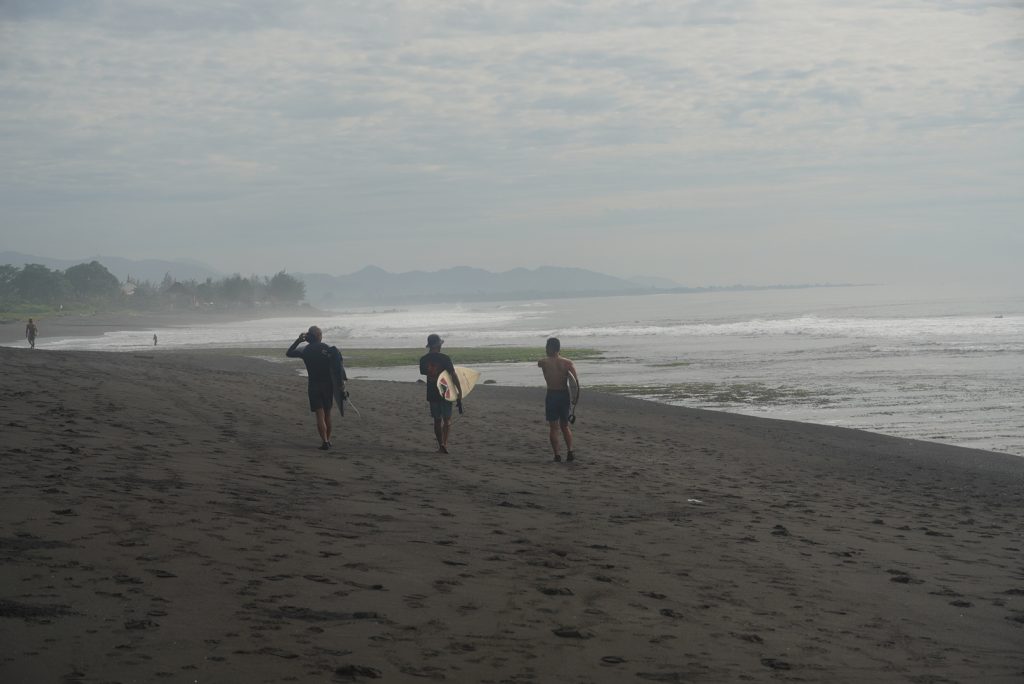
Balian shows up on a lot of “best surf spots in Bali” lists, so it’s no surprise beginners ask me whether they should paddle out there. Here’s my honest, coach’s-eye answer, plus everything you need to know about conditions, safety, and gear if you decide to give it a go.
Is Balian Beach Good for Beginners?
Short answer: Balian is officially an intermediate-level break, not a true first-timer spot. It’s not classed alongside the soft, sand-bottom beginner beaches of South Bali.
That doesn’t mean a beginner can never enjoy it. What it means is timing and guidance matter a lot more here than at a classic learner beach. Balian breaks over a dark volcanic rock and sand shelf, producing punchy, shifting A-frame peaks — fun and playable on a small day, but faster and less forgiving than a pure sandy beach break once the swell picks up. If you’re brand new to surfing (first few sessions, still working on your pop-up), I’d point you toward a softer beach break first and treat Balian as a “graduation” spot once you can already catch green waves and steer confidently. If you’ve got some whitewater/green-wave experience already and you’re surfing with a coach who can pick the right day and the right peak for you, Balian is very workable.
What Are the Wave Conditions Like at Balian?
- Wave type: Reliable, punchy A-frame peaks (breaking both left and right) over a volcanic cobblestone/sand shelf
- Swell size: Typically works from 3–6 ft
- Swell direction: South/southwest
- Best tide: Mid tide
- Consistency: Year-round — it’s genuinely known as a swell magnet, often still firing with rideable waves when spots further south and east have gone flat
That last point is actually Balian’s biggest strength for progressing surfers: on days when the more famous South Bali breaks are dead calm, Balian is often still catching pulses of swell. As a coach, I love using it as a backup option on flat days — just with a close eye on wave size and who’s paddling out.
What’s the Best Time to Surf Balian as a Beginner?
If you’re going to try Balian while you’re still building confidence, aim for:
- Small swell days — the lower end of that 3–6 ft range, not the top
- Mid tide — this is the window the wave is designed to work best on; it keeps the shelf covered with enough water while still holding shape
- Early morning — Bali’s winds are calmest and glassiest right after sunrise, before the trade winds pick up and start roughening the surface
Skip it on bigger days, or let your coach make that call for you. A-frame peaks that are “fun and punchy” at 3 ft can turn into something well beyond beginner territory once they’re pushing past that range.
What Board Should a Beginner Bring to Balian?
Because Balian isn’t a soft sand-bottom beach, board choice matters more here than at, say, Kuta.
- Go bigger on volume than you think you need. More foam under you means earlier, easier wave catching and a more stable, forgiving ride — exactly what you want while you’re still reading a less predictable peak.
- A soft-top or foam longboard is a smart choice for anyone still working on pop-ups and balance, since it resists tipping and cushions impact if you fall.
- Match your leash to your board (roughly a 6 ft leash for a 6 ft board, 9–10 ft leash for a longboard), and go for a thicker cord — Balian’s rockier bottom means you don’t want your leash snapping mid-session.
- If you’re not sure what volume you personally need, that’s exactly the kind of thing to sort out with your instructor before you paddle out — body weight, fitness, and confidence all factor in.
What Safety Hazards Should Beginners Know About at Balian?
This is the part I want every beginner to actually read, not skim.
1. The bottom is rock, not sand. Balian breaks over a volcanic cobblestone and sand shelf. Falling here isn’t like falling on a Kuta sandbar. If you do wipe out, don’t dive head-first or put your feet down to “catch yourself” — fall flat, spread out (think starfish), and protect your head with your arms until you resurface. This keeps you from driving a foot or hand into the rocks below.
2. It’s a river-mouth beach. Balian sits near a river delta, and that matters most in the wet season (roughly November through February/March). Heavy rain flushes runoff, agricultural residue, and bacteria straight out through the river into the surf zone here. My advice: avoid surfing at Balian for 48–72 hours after heavy rain, don’t swallow seawater, and rinse off with clean water (not tap water) as soon as you’re out — this protects you from the stomach bug travelers call “Bali belly.”
3. Currents pick up mid-tide-cycle. Water moves fastest through the middle hours of a rising or falling tide, not right at high or low tide. If you feel yourself getting pulled by a current, don’t fight it straight back toward shore — paddle sideways, across the current, toward the breaking peak, and let incoming waves help push you in.
4. It’s a shifting peak, which means shared space. Because the A-frame peaks move around rather than breaking in one fixed spot, positioning takes more reading of the wave than a straightforward beach break. This is where local knowledge (yours or your coach’s) really pays off.
Lineup Etiquette Every Beginner Should Know
Wherever you surf in Bali, these basics keep you — and everyone around you — safe:
- Whoever is closest to the breaking peak has priority. If you’re further down the shoulder, it’s not your wave — wait your turn.
- Never drop in on someone already up and riding toward you.
- Don’t “snake” — paddling around behind someone to jump the rotation is bad form and creates collisions.
- Hold onto your board. Letting go when a wave is coming turns your surfboard into a projectile for the next person paddling out. Learn to duck-dive or turtle-roll instead.
- Paddle out through the channel, not through the middle of the peak, and if you get caught inside, paddle into the whitewater rather than across an open face where someone is riding.
Should Beginners Start Somewhere Else First?
If you’re picking your very first Bali surf spot, I’ll be straight with you: places like Kuta Beach, Seminyak, or Batu Bolong (Canggu) are better first stops. They’re sand-bottom or deep, slow-rolling volcanic reef, with none of Balian’s rockier hazards, and they’re where most surf schools run their beginner lessons for good reason — forgiving whitewater, room to fall, and no coral or cobblestone to worry about.
My usual progression for students who want to eventually surf Balian:
- First sessions: Kuta/Seminyak, Kelan Airport, Muaya Beach whitewater — paddling, pop-up, balance
- Early green waves: Batu Bolong, Balangan — longer, slower rolling waves to practice trim and turning
- Once you’re steering confidently: graduate to a small, well-guided day at Balian
Getting There & Practical Tips
Balian sits on the west Bali coast (Tabanan regency), a bit further up the coast past Canggu and Medewi — plan for roughly 1.5–2 hours’ drive from the Kuta/Seminyak/Canggu area, so it’s more of a day-trip spot than a paddle-out-before-breakfast one. A few practical notes:
- Check the swell forecast the night before — you want the smaller end of that 3–6 ft range for a beginner-friendly session
- Aim to arrive around mid tide
- Bring reef-safe sunscreen, plenty of water, and a rash vest — sessions here tend to run longer given the drive
- If it’s your first time at this specific break, surf it with a local coach or guide the first time, even if you’ve surfed elsewhere in Bali before — every break has its own personality
Final Word from Your Coach
Balian is one of my favorite breaks to bring surfers to once they’ve got the fundamentals down — it’s playful, consistent, and often firing when the rest of the island isn’t. Just don’t let a “top surf spot” list convince you it’s your first-session beach. Build your pop-up and wave-reading somewhere forgiving, then come find me — we’ll pick the right small-swell, mid-tide morning and get you out on Balian with a plan, not a guess.
Want a guided session tailored to your level? That’s exactly what we do at Surf Journey Bali — book a coached lesson and we’ll match you to the right break and the right day, Balian included.

Yosua is a surf enthusiast with over 5 years of chasing waves across Bali’s iconic coastlines. From West coast to East coast of Bali, he’s spent years exploring what makes Bali one of the world’s greatest surf destinations. Through Surf Journey Bali, Yosua shares honest guides, local tips, and surf travel insights to help both beginners and seasoned wave-riders make the most of their Bali surf experience.