
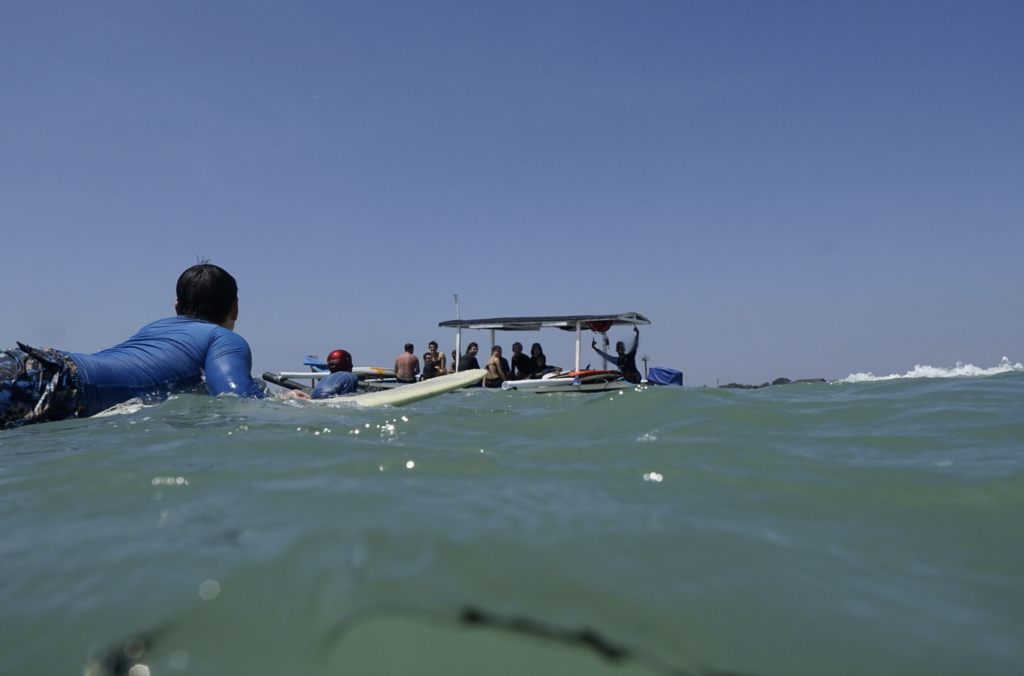
When the wet season rolls in and the west coast’s famous breaks turn choppy and onshore, one small reef off the southern tip of Sanur quietly becomes the island’s most dependable bet. Serangan isn’t glamorous, and it isn’t a single, clean wave — but for surfers staying anywhere near Kuta, Sanur, or Canggu during the wet months, it’s often the difference between a flat day and a genuinely good session.
Where Is Serangan?
Serangan sits just south of Sanur, on what’s technically a separate island — formerly known as Turtle Island, thanks to a turtle sanctuary based there. Access has shifted over the years: the break was once reachable by road across a causeway, with beachside warungs lining the sand and a laid-back scene built around it.
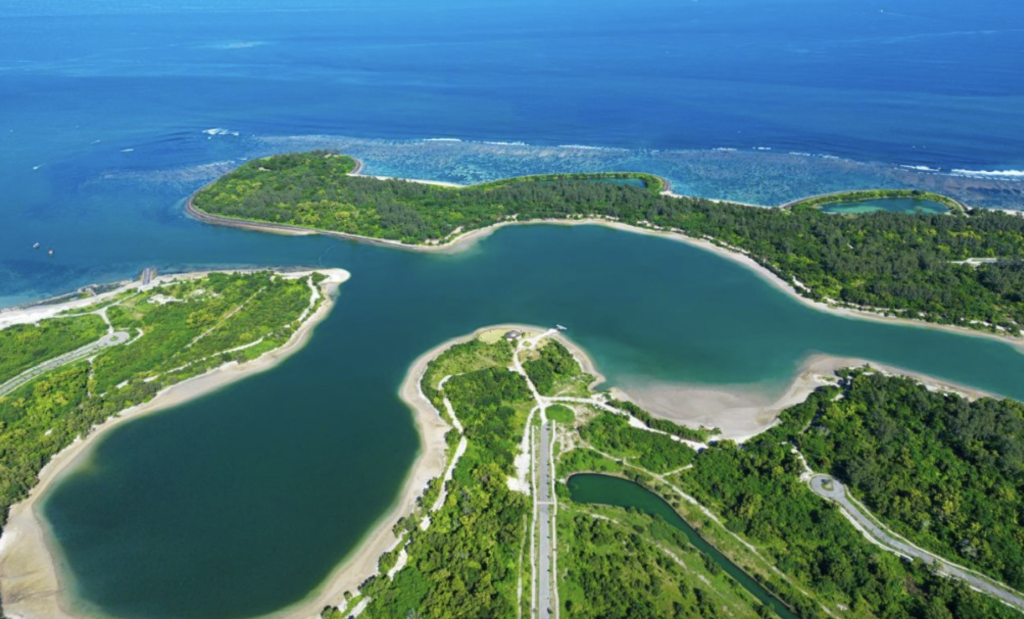
Land access to the wave itself has become more restricted since the island saw development and privatization in recent years, so today it’s best treated as a boat-access destination — arranged through a local guide or surf operator who can confirm current access before you go, since these details are worth double-checking closer to your trip.
Why It’s Called a Swell Magnet
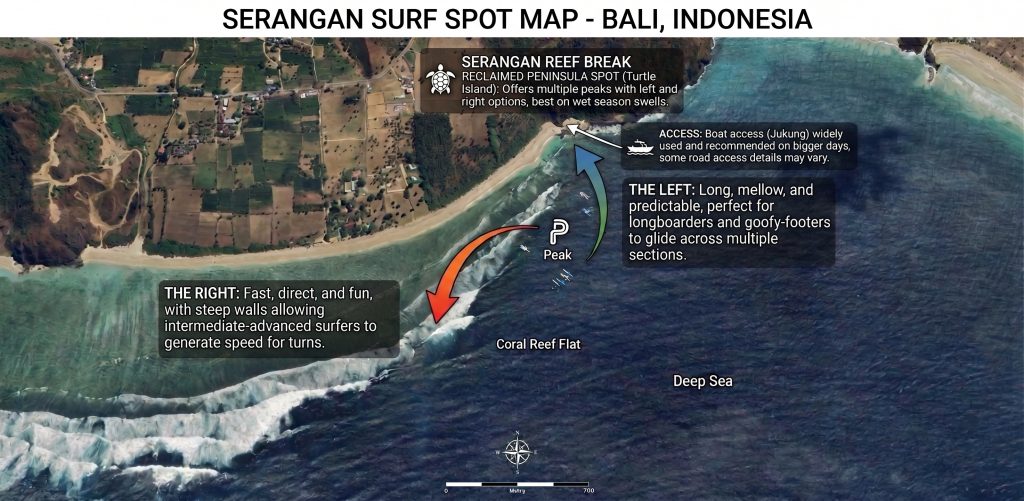
Serangan isn’t one wave, it’s a broad coral platform hosting somewhere around five or six shifting peaks that move around as the tide changes. That’s exactly what makes it so reliable: rather than depending on one specific setup lining up perfectly, there’s almost always something breaking somewhere along the reef.
It generally handles swell up to about one-and-a-half times overhead — bigger than that, and the sections start losing their shape and closing out — with rideable waves ranging from waist-high to double overhead depending on the day.
The Peaks, Broken Down
- The Main (Southern) Peak: This section picks up the most swell and is the most consistent part of the reef. It offers a powerful, steep takeoff that lets you get into the wave early, though it softens quickly — expect a punchy start followed by a couple of solid turns before it runs out from under you. A favorite for intermediate-to-advanced surfers working on cutbacks and carves.
- The Northern A-Frame: A left-and-right peak that looks better from the boat than it always surfs. The left tends to be the better option, offering a longer, cruisier ride, while the right is shorter and can get genuinely hollow on bigger days before closing out.
- The Inside / Channel Section: Closer to shore and noticeably gentler, breaking over a deeper reef or sand bottom. This is where a lot of surf lessons at Serangan actually begin — forgiving enough for beginners and longboarders to work on paddling, standing up, and riding small waves without the pressure of the more powerful outer peaks.
Tide and Wind
Serangan technically works across the tidal range, but mid-tide is the genuine sweet spot — low tide tends to cause sections to close out or break too quickly, and it exposes more of the reef, including the urchins that like to hide in its holes and crevices. The wave wants offshore wind blowing from the north through west, which lines up directly with the same wet-season monsoon pattern that grooms the rest of Bali’s east coast.
Best Season to Go
This is squarely a wet-season wave. As the swell direction shifts from southwest toward southeast through the wet months (roughly November to March), more consistent swell pushes up through the Bali Sea and wraps into this stretch of reef — the same window that lights up Sanur to the north and Nusa Dua to the south. Serangan can still work during the dry season, but expect smaller, lower-quality conditions thanks to onshore easterly trades; the upside is that a dry-season session here often comes with far fewer people, since most visiting surfers are fixated on Uluwatu and Dreamland at that time of year.
Crowds and Hazards
Precisely because it’s such a dependable wet-season option, Serangan draws a real crowd once word gets out that it’s working — expect a mixed-ability lineup rather than an empty reef. The main hazard to plan around is the coral itself: reef booties are worth having, particularly if you’re navigating the shallower sections at lower tide, and it’s worth keeping an eye out for urchins tucked into the reef’s crevices.
Who Should Surf Here
Serangan genuinely offers something across skill levels, provided you’re matched to the right peak:
- Beginners are best suited to the inside/channel section, ideally with an instructor or guide who knows the current layout of the reef.
- Intermediate surfers will find the most fun at the A-frame, particularly the longer, more forgiving left.
- Advanced surfers get the most out of the Main Peak’s punchy, high-performance takeoff.
On equipment, a longboard suits the smaller, softer days here well, with a shift toward a shortboard as swell size and power pick up.
The Bottom Line
Serangan won’t win any beauty contests next to Bali’s postcard breaks, but that’s not really the point. It’s the wave that keeps working when the rest of the island doesn’t — a genuine wet-season lifeline for anyone based near Sanur, Kuta, or Canggu who doesn’t want their trip dictated entirely by the west coast’s dry-season swell window.
Planning a wet-season trip to Bali? Ask us about a guided boat session at Serangan — we’ll match you to the right peak and time it around the tide that suits your level.

Yosua is a surf enthusiast with over 5 years of chasing waves across Bali’s iconic coastlines. From West coast to East coast of Bali, he’s spent years exploring what makes Bali one of the world’s greatest surf destinations. Through Surf Journey Bali, Yosua shares honest guides, local tips, and surf travel insights to help both beginners and seasoned wave-riders make the most of their Bali surf experience.