

Packing sunscreen for a surf trip sounds simple until you actually start reading labels. Reef-safe, mineral, non-nano, broad-spectrum — the terminology gets confusing fast, and getting it wrong matters more here than on an ordinary beach holiday. A few hours of paddling under Bali’s equatorial sun is a very different exposure than lying under an umbrella, and a lot of what you’re wearing washes straight onto the reef you’re surfing over. Here’s exactly what to look for.
Why Ordinary Sunscreen Falls Short Here
Bali sits close to the equator, meaning UV intensity is consistently strong year-round in a way that catches a lot of visitors off guard — a couple of hours in the water here delivers meaningfully more solar exposure than the same time spent surfing somewhere temperate. A sunscreen that’s “good enough” at home often isn’t built for this level of intensity, or for the repeated reapplication a real surf session demands.
There’s a second issue too, specific to surfing rather than sunbathing: you’re in direct, sustained contact with the ocean, paddling and falling directly over the reef itself at spots throughout Bali. Certain chemical sunscreen ingredients — oxybenzone, octinoxate, octocrylene, and homosalate among them — have been linked to coral bleaching, DNA damage, and disrupted coral reproduction, serious enough that destinations like Hawaii, Key West, Aruba, and the US Virgin Islands have restricted or banned them outright. Surfing puts you in far more direct, repeated contact with that reef than a casual swimmer ever experiences.
Mineral vs. Chemical Sunscreen, Explained Simply
Sunscreens work in one of two fundamentally different ways:
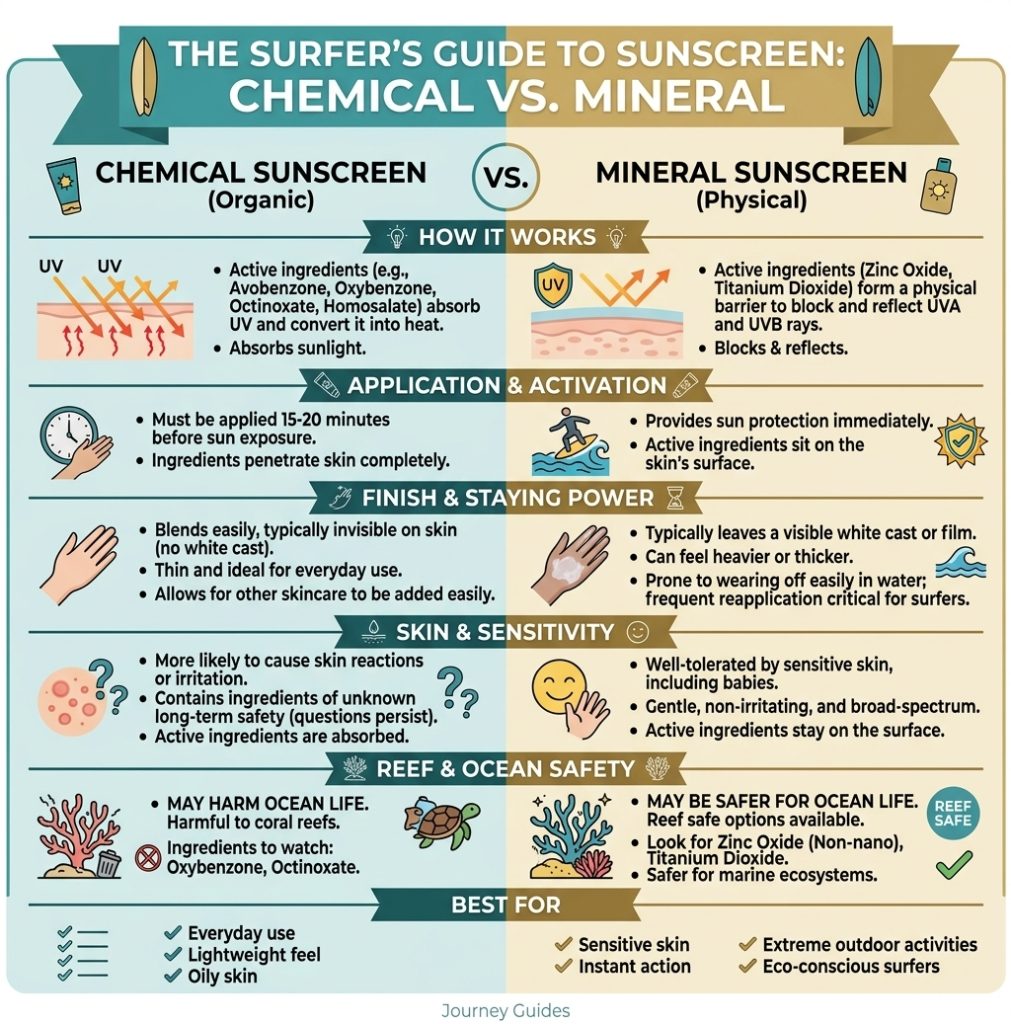
- Chemical sunscreens absorb into the skin and work by absorbing UV radiation before it can damage skin cells. This is where the reef-damaging ingredients above typically show up.
- Mineral (physical) sunscreens use zinc oxide or titanium dioxide, which sit on top of the skin rather than absorbing into it, physically reflecting and scattering UV rays away. This is the category considered genuinely reef-safe, and it also tends to be gentler on sensitive or sun-irritated skin.
For surfing specifically, mineral sunscreen is the clear choice — better for a reef environment, and better suited to skin that’s about to spend hours in salt water and direct sun.
The Label Details That Actually Matter
A few terms are worth understanding before you buy, since marketing language doesn’t always match the substance:
- Non-nano: This refers to the size of the mineral particles — specifically, larger than 100 nanometers. Particles above that size stay on the skin’s surface rather than being absorbed into tissue or dispersing easily into seawater, where smaller nano particles can be ingested by coral and other marine life. Worth knowing: “reef-safe” itself isn’t a regulated or legally defined term anywhere, so a product can call itself reef-safe without much behind the claim. Checking specifically for “non-nano zinc oxide” on the ingredient list is a more reliable filter than the marketing label alone.
- SPF: This measures how much longer you can stay in the sun before burning compared to bare skin — SPF 15 means roughly 15 times longer, in theory. Given the length and intensity of a typical surf session here, SPF 30 to 50 is a sensible baseline rather than anything lower.
- Water resistance: Look for a rating around 80 minutes, which has become a fairly common benchmark among surf-oriented mineral sunscreens. Treat this as a guideline, not a guarantee — plan to reapply after any real session in the water regardless of the stated rating.
Recommended Sunscreens for Surfing
A few well-regarded mineral, reef-conscious options worth considering:
- Badger Sport Mineral Sunscreen SPF 40 — a widely respected, minimal-ingredient formula with strong water and sweat resistance, popular for its clean ingredient list.
- Thinksport SPF 50+ — a well-known sport-focused mineral sunscreen built around a high concentration of non-nano zinc oxide, with roughly 80 minutes of water resistance.
- Stream2Sea — developed with direct coral-safety testing in mind, a solid choice for anyone wanting extra assurance beyond standard reef-safe marketing claims.
- Raw Elements — a fully mineral, biodegradable formula often favored by surfers and divers alike.
- Sun Bum Mineral SPF 50 — broadly available and a gentler option for sensitive skin.
- Manda Organic Sun Paste — worth a mention specifically for tropical surf trips, formulated to hold up through long, hot, humid sessions.
And Bali specific available sunscreen:
- Surf Yogis
- Banana Boat
- AVEDA
- Hawaiian Tropic
- Sunny Days
- Bali Breeze
Texture and finish vary noticeably between mineral sunscreens — some leave a visible white cast, others blend more sheer — so it’s worth testing a product at home before relying on it for a full trip.
How to Apply It Properly
Mineral sunscreen needs a little lead time to actually work: apply it roughly 15 to 20 minutes before you head into the water, giving it time to settle and bind to your skin rather than washing straight off on your first duck-dive. Most people also genuinely under-apply — use a generous layer rather than a thin swipe, and don’t skip the spots people commonly forget: the back of your neck, the tops of your feet, your ears, and your hairline.
Plan to reapply roughly every 80 minutes during a longer session, or any time you’ve toweled off between sets. A single morning application isn’t going to carry you through a full day of surfing.
Pair It With a Rash Guard
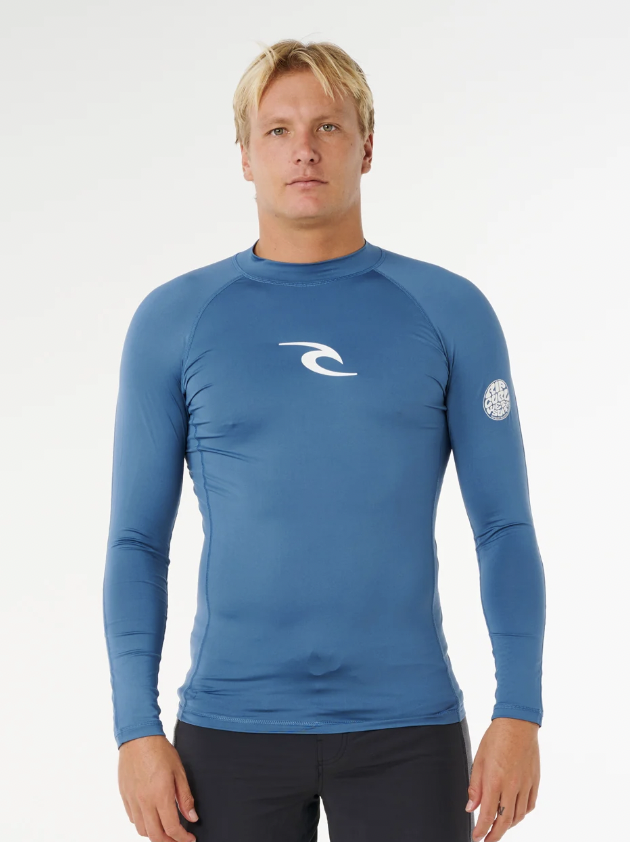
Sunscreen works best as part of a system, not a solo defense. A UPF 50+ rash guard covers your torso and arms entirely, meaningfully cutting down the surface area you need to keep reapplying sunscreen to — and it happens to double as protection against wax rash from the board itself. Between a good rash guard and mineral sunscreen on the areas still exposed, you’ll get through a multi-day trip with far less sunburn and far less product than trying to cover everything with sunscreen alone.
Respecting Bali’s Reefs
Beyond sunscreen choice, it’s worth remembering the reef itself deserves care while you’re out there — avoiding contact with living coral, never standing or kicking off it, applies just as much at Bali’s reef breaks as anywhere else known for sensitive marine ecosystems. Choosing a genuinely mineral, non-nano sunscreen is one part of that respect; how you move through the water around the reef is the other.
The Bottom Line
For a Bali surf trip, the sunscreen that actually works is a mineral, non-nano formula with SPF 30 or higher and solid water resistance — applied generously, ahead of time, and reapplied more often than feels necessary. It’s a small detail to get right before you pack, and it protects both your skin and the reef you’re about to spend your trip surfing over.
Heading out with us? We’ll have reef-safe sunscreen recommendations and gear on hand — just ask when you book.

Yosua is a surf enthusiast with over 5 years of chasing waves across Bali’s iconic coastlines. From West coast to East coast of Bali, he’s spent years exploring what makes Bali one of the world’s greatest surf destinations. Through Surf Journey Bali, Yosua shares honest guides, local tips, and surf travel insights to help both beginners and seasoned wave-riders make the most of their Bali surf experience.