

Surf watches have quietly gone from niche gadget to a genuine category, with Garmin, Apple, Casio, Rip Curl, and Nixon all competing for wrist space among surfers. But before you add one to your packing list, it’s worth asking the honest question: is this actually useful, or just another thing to charge before your trip? Here’s what these watches actually do, whether they’re worth it, and which ones are genuinely good in 2026.
What a Surf Watch Actually Does
At its core, a surf watch pairs GPS and biometric sensors to track the details of a session that used to be pure guesswork: paddle distance, wave count, top speed, and heart-rate zones, giving you a way to review your physical output and session timing after the fact. Many models now sync directly with the same swell-forecasting technology serious surfers already rely on — global wave models process satellite and atmospheric data to predict swell, and platforms like Surfline translate that into real-time wave height, period, and wind readings. Several watch brands have built direct partnerships into that ecosystem, pulling forecast data and even wave-cam footage straight onto your wrist or connected app.
Do You Actually Need One?
Honestly — for a single Bali trip, probably not essential. A phone with a forecasting app covers tide times and swell conditions just fine for most travelers, and your instructor will be reading conditions for you anyway during lessons. Where a surf watch earns its keep is different: if you’re surfing multiple days in a row and want to track your own progress, if you like reviewing session data the way runners track pace, or if surfing is becoming a genuine part of your regular life rather than a one-off holiday activity. It’s a nice-to-have for a beginner, and a genuinely useful tool for anyone surfing regularly.
What to Look For
Before comparing brands, a few features actually matter more than others:
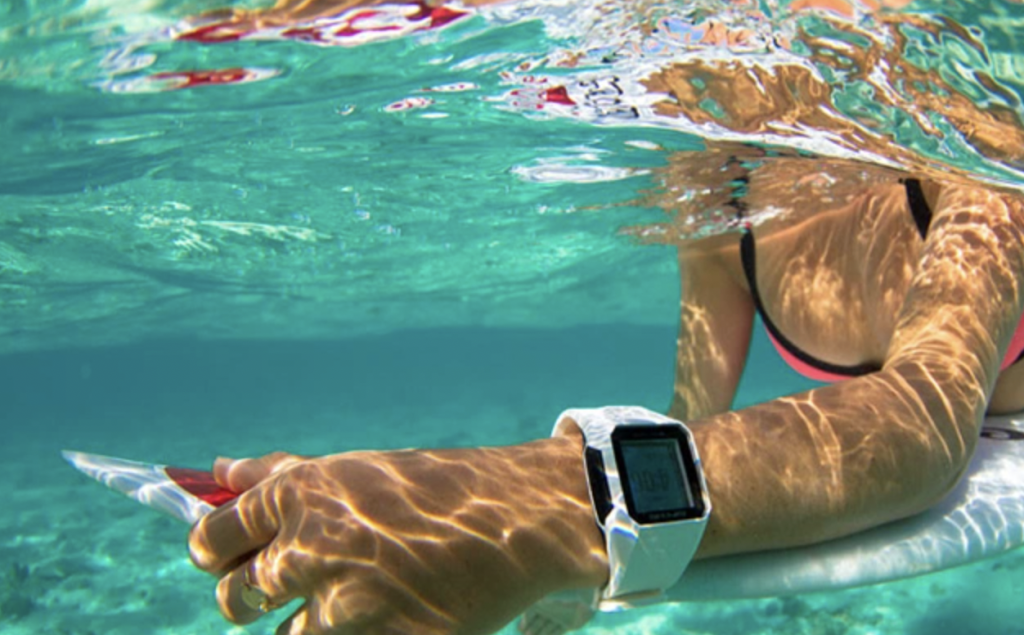
Image by: wetsuitoutlet.co.uk
- Real water resistance, not just “waterproof”: Standard swim-rated watches (50m/5 ATM) aren’t built for the pressure spikes a duck-dive or a hard wipeout creates. 100 meters of rating is a more realistic minimum for actual surf use.
- Impact resistance: This gets overlooked constantly. Boards hit watches, and water hits watches hard at speed — a surf watch needs to survive physical impact, not just submersion.
- Tide data: The single most universally useful feature, telling you when to paddle out without pulling out your phone.
- GPS wave tracking: Wave count, top speed, and distance paddled, for anyone who wants to see the numbers behind a session.
- Battery life: Solar charging has become a real differentiator for longer trips where charging access isn’t guaranteed.
Best Surf Watches by Category
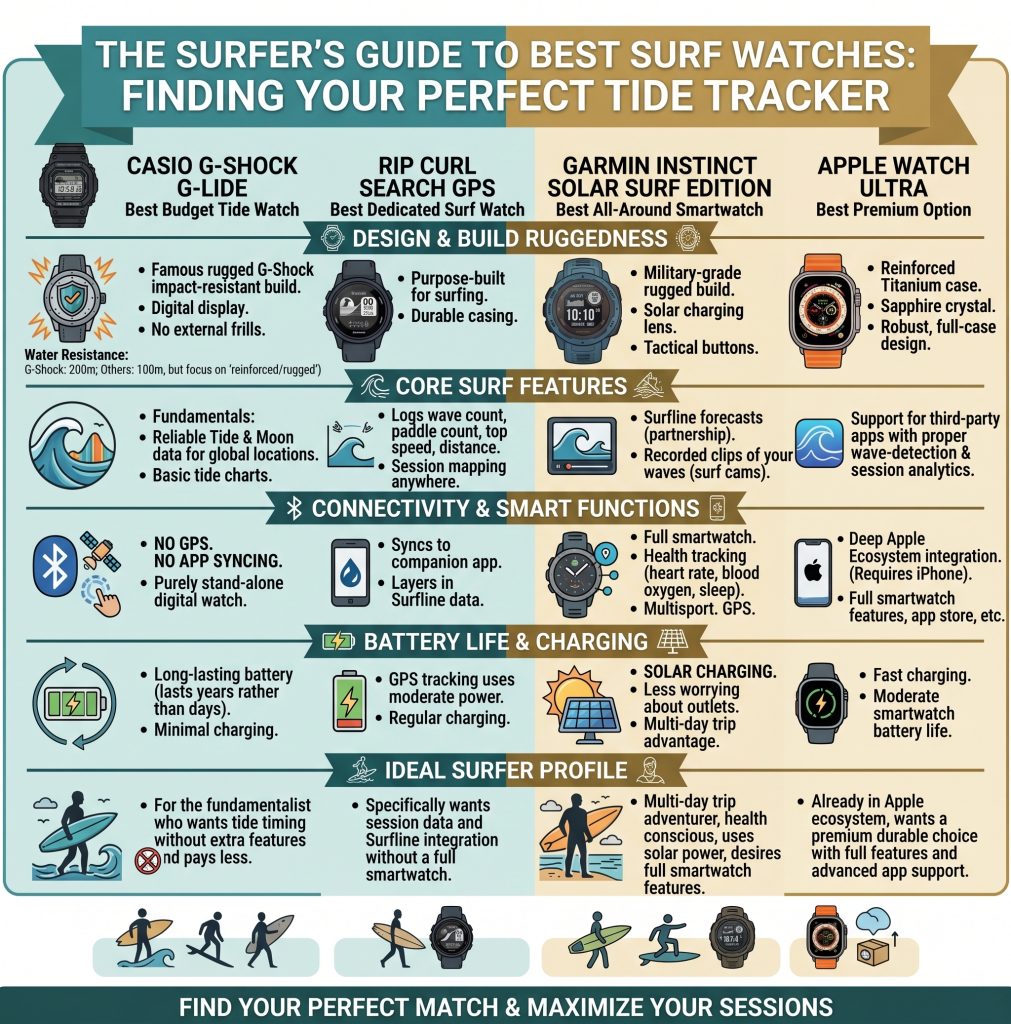
- Best Budget Tide Watch: Casio G-Shock G-Lide Casio’s G-Lide series sticks to the fundamentals — tide and moon data for a huge range of locations, wrapped in G-Shock’s famously rugged, impact-resistant build. No GPS, no app syncing, no smartwatch frills, just reliable tide information and a watch that can take a beating. For surfers who want the one genuinely useful feature (tide timing) without paying for features they won’t use, this is hard to beat. Casio’s simpler digital models go even more budget, offering basic tide charts and a battery that lasts years rather than days.
- Best Dedicated Surf Watch: Rip Curl Search GPS Built specifically for surfing rather than adapted from general fitness tracking, the Search GPS line logs wave count, paddle count, top speed, and distance, syncing to a companion app that layers in Surfline forecast data and session replay footage. It’ll map your session anywhere — including breaks that aren’t on any official list — and also tracks stand-up paddleboarding, kitesurfing, and bodyboarding if you’re mixing up your time in the water. For surfers who specifically want session data without needing a full smartwatch, this remains the most purpose-built option on the market.
- Best All-Around Smartwatch: Garmin Instinct Solar Surf Edition Garmin’s Instinct Solar Surf lineup pairs genuine smartwatch functionality — sleep tracking, heart rate, blood oxygen — with surf-specific features built through a partnership with Surfline, delivering swell forecasts and even recorded clips of your waves from local surf cams. Solar charging is the real advantage here for a multi-day trip: less worrying about outlets, more time actually surfing. Its rugged, military-grade build holds up well to the demands of regular ocean use, and it functions just as well for hiking or general daily wear once you’re off the water.
- Best Premium Option: Apple Watch Ultra If you already live inside the Apple ecosystem, the Ultra is the standout choice — unlike the standard Apple Watch (rated for swimming at 50m but not built for surf impacts), the Ultra’s reinforced case pushes water resistance to 100m, making it genuinely suited to surf conditions rather than just tolerant of them. Third-party surf-tracking apps have increasingly added dedicated Apple Watch support, layering proper wave-detection and session analytics on top of Apple’s general fitness tracking. The trade-off is price and the fact that you’re paying for a full smartwatch’s worth of features well beyond surfing.
A Practical Note on Durability
It’s worth repeating: water resistance and impact resistance are two different things, and surf watches need both. A watch rated for swimming can still crack or flood from the direct impact of a board or a hard wipeout, even if it would have survived being simply submerged. If you’re shopping on spec sheets alone, don’t let a high water-resistance number alone convince you a watch is surf-ready — check specifically whether it’s built or marketed for surf and impact-sport use, not just water sports in general.
The Bottom Line for a Bali Trip
If this is a single trip and you’re just here to learn, don’t feel any pressure to buy specialized gear — your phone and your instructor have the conditions covered. If you’re already a watch person, or you’re planning to make surfing a regular part of your life beyond this trip, a dedicated surf watch is a genuinely worthwhile upgrade: tide data on your wrist, real session tracking, and a nice way to watch your own progress build over a multi-day stretch of lessons.
Curious how the pros check conditions before a session? Ask your instructor — we’re happy to show you what we watch before deciding where and when to paddle out.

Yosua is a surf enthusiast with over 5 years of chasing waves across Bali’s iconic coastlines. From West coast to East coast of Bali, he’s spent years exploring what makes Bali one of the world’s greatest surf destinations. Through Surf Journey Bali, Yosua shares honest guides, local tips, and surf travel insights to help both beginners and seasoned wave-riders make the most of their Bali surf experience.