
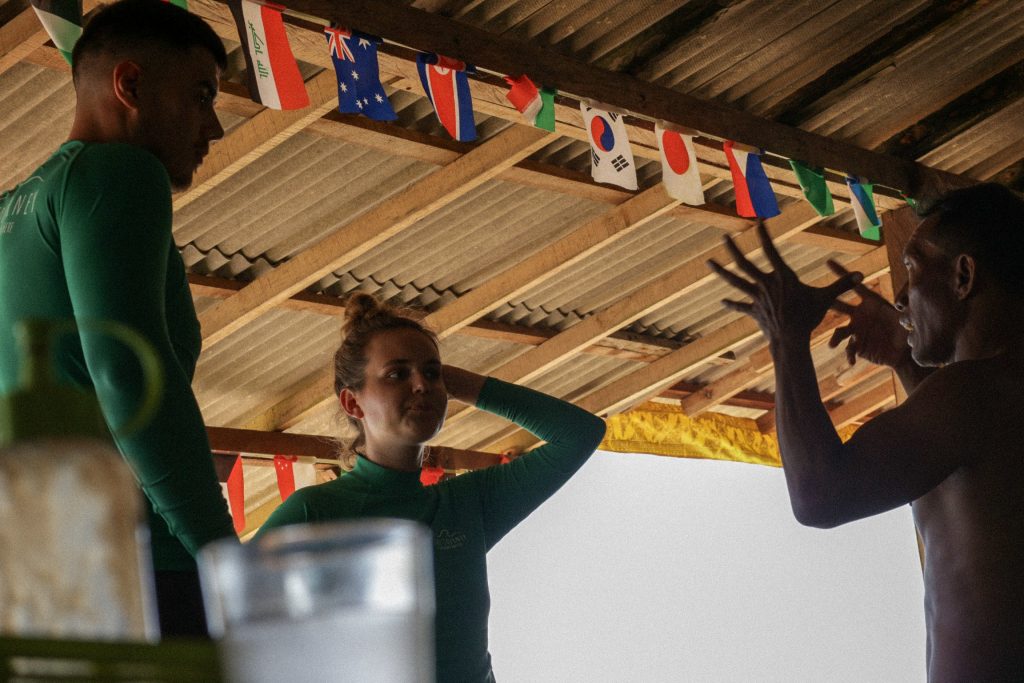
If you’ve never stood on a surfboard before, it’s completely normal to feel a mix of excitement and nerves before your first lesson. Will I look silly? Will I get hurt? Am I even fit enough for this? As a surf coach here in Bali, I hear these questions almost every day — and I can tell you that surfing is one of the most welcoming sports there is, precisely because it’s built for beginners to progress safely, one small step at a time. Here’s a real, honest walkthrough of what actually happens during a first surf lesson, so you can walk down to the beach feeling prepared instead of anxious.
Before You Even Touch the Water
Every good lesson starts on the sand, not in the surf. Your instructor will run you through a short warm-up — light jogging, arm circles, hip openers, and a few dynamic stretches — because surfing asks your shoulders, spine, and hips to move in ways they’re not used to. This isn’t about being an athlete; it’s simply about waking up the muscles you’re about to use, so you feel looser and less sore afterward.
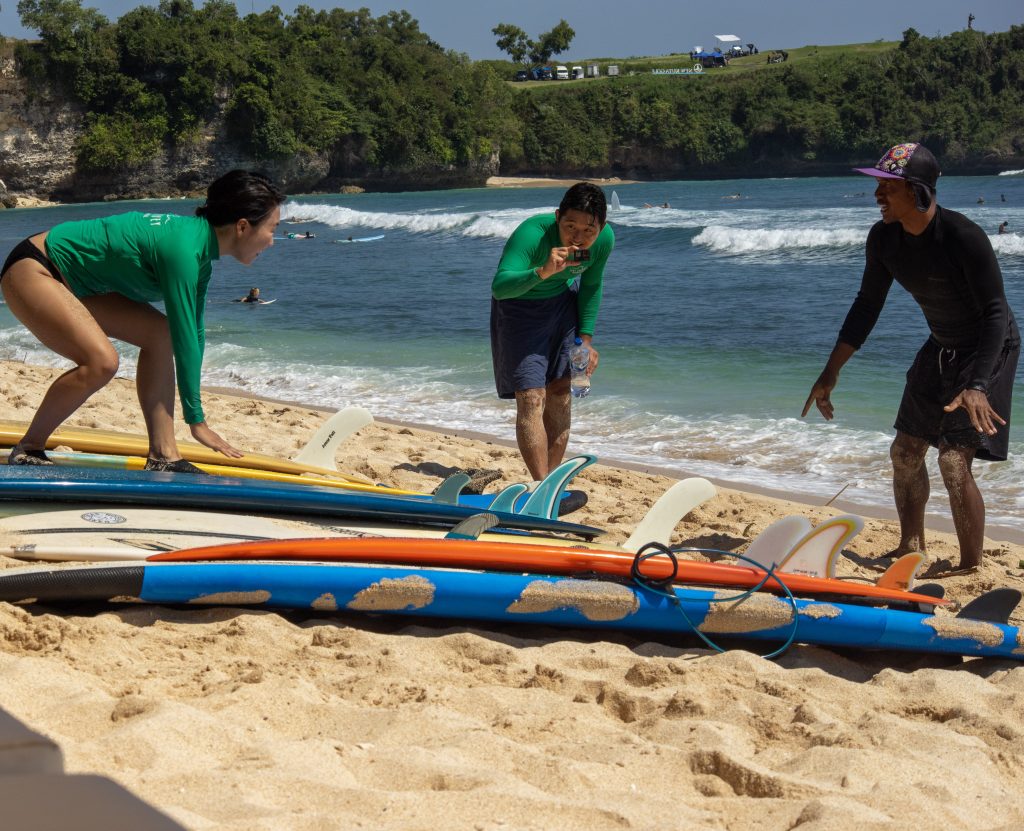
From there, your coach will walk you through the basics of your board and the two skills that matter most on day one: paddling and the pop-up (the movement from lying down to standing up). You’ll actually practice the pop-up right there on the sand, several times, before you ever paddle out. It feels a little silly hopping up on a board in the sand — but this dry-land rehearsal is what makes the movement feel familiar once a wave is actually pushing you from behind.
Meet Your First Surfboard
Don’t expect a sleek, narrow shortboard. Your first board will almost certainly be a soft-top foam longboard, typically somewhere around 8 to 9 feet long. It’s wide, thick, and buoyant on purpose — this shape sits high on the water, catches waves easily, and is far more forgiving than a performance board. It’s also softer if it happens to bump you, which takes a lot of the fear factor out of falling. Beginner boards like this are designed to do the hard work for you while you focus purely on balance and timing, rather than fighting to keep the board stable underneath you.
Where Your Lesson Actually Happens
You won’t be taken anywhere near the reef breaks Bali is famous for. First lessons happen on soft, sandy-bottomed beaches — places like Kuta or Seminyak are the classic choice — where the waves roll in as gentle whitewater rather than breaking sharply over rock or coral. This matters for two reasons: it’s simply safer, and it gives you a forgiving learning environment where a wobble or a fall has zero consequence beyond a splash. Your instructor will also choose the timing of your session around the tide, since a fuller, mid-to-high tide softens the wave energy and makes conditions gentler for a first-timer.
In the Water: What the Lesson Looks Like
Once you’re in the shallows, your coach will guide you through:
Your instructor will likely be right beside you in the water for these early attempts, physically helping position the board and calling out timing, so you’re never left guessing when to paddle or when to pop up.
Falling Is Part of the Plan
You will fall. Probably a lot, and that’s genuinely fine — every surfer, including your instructor, started exactly there. The one real safety habit worth learning early is what to do if you do fall in shallow water: cover your head with your arms and let yourself fall flat rather than diving forward or planting your feet down first. On the soft sand beaches used for beginner lessons this is mostly precautionary, but it’s a good habit to build from day one.
A Few Ocean Manners You’ll Pick Up
Even in a beginner-friendly lineup, your coach will introduce you to a couple of simple, unspoken rules of the water:
You won’t be expected to master ocean etiquette in one session — just to start understanding that surfing has a natural rhythm and shared respect among everyone in the water.
What You Can Realistically Expect to Achieve
Most first-timers stand up — even if briefly — within their first hour or two of instruction, especially on a soft whitewater wave with a coach guiding the timing. It won’t look like the surf videos yet, and that’s not the goal. The real win of lesson one is building the muscle memory of the pop-up, getting comfortable reading when a wave is arriving, and — most importantly — realizing the whole experience is a lot more achievable, and a lot more fun, than it looked from the beach.
After the Lesson
Expect tired shoulders and maybe a tender ribcage or hip flexors the next day — that’s completely normal for a first session and a sign you used muscles you don’t use often. A short stretch and some rest is usually all it takes to recover before your next go.
Ready to Give It a Try?
Every surfer in the water today, from weekend beginners to the pros riding Uluwatu, started with exactly the session described above. There’s no fitness level or age you need to hit first — just a willingness to fall a few times and laugh about it. If you’re thinking about booking your first lesson in Bali, that’s genuinely all the preparation you need.

Yosua is a surf enthusiast with over 5 years of chasing waves across Bali’s iconic coastlines. From West coast to East coast of Bali, he’s spent years exploring what makes Bali one of the world’s greatest surf destinations. Through Surf Journey Bali, Yosua shares honest guides, local tips, and surf travel insights to help both beginners and seasoned wave-riders make the most of their Bali surf experience.