
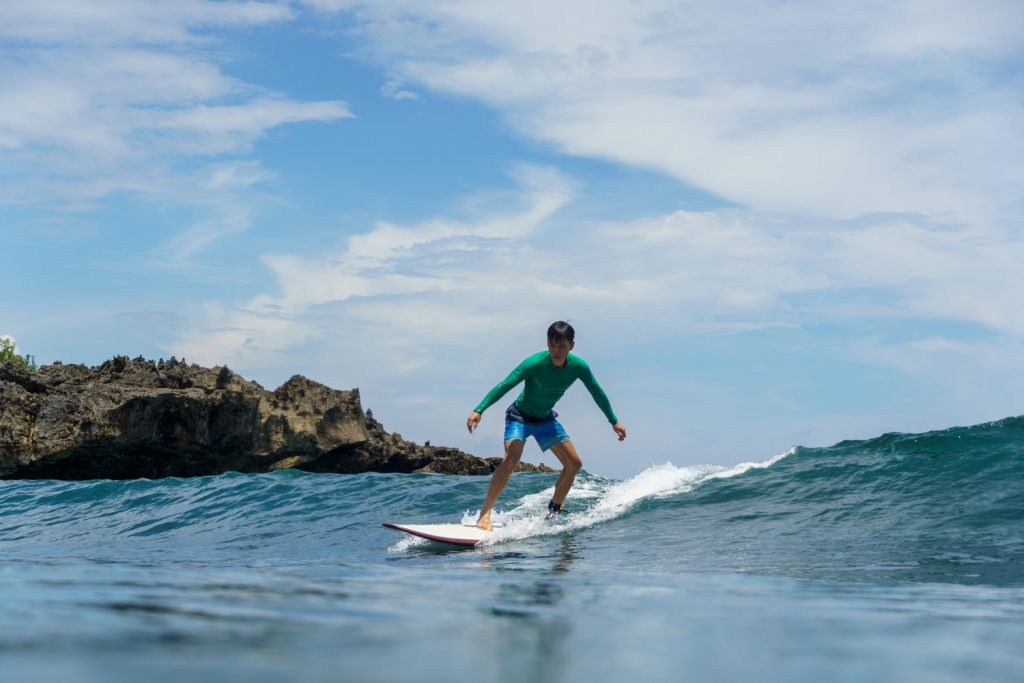
Blackstone is a wave I point a lot of Nusa Dua-based surfers toward when they want genuine reef-break experience without diving straight into something heavy. It’s got a distinctive shape and a bit of nuance worth understanding before you go — here’s the full picture.
What Is Blackstone, and Where Is It?
Blackstone is a reef break on Bali’s east coast, in Nusa Dua. Its defining feature is how the wave actually forms: a wedging left-hand peak created by swell energy reflecting off an offshore island, rather than simply refracting around a headland the way most waves do. That reflection is what gives Blackstone its distinctive wedge.
Is Blackstone Good for Beginners?
Blackstone is rated Beginner to Intermediate, with an important detail attached: the wave has two separate character zones. The outer section, where the wedge actually forms, suits lower intermediates who already have some reef-break comfort. It then softens into an inside reform section that offers genuinely safe training for less experienced surfers. In practice, that means Blackstone can work across a real range of abilities in the same session — as long as you’re honest with yourself about which part of the wave matches where you’re at.
What Are the Wave Conditions Like at Blackstone?
- Wave type: Wedging left-hand peak off an offshore island reflection, softening into a gentler inside reform section
- Swell size: Typically 2–5 ft
- Swell direction: South/southwest
- Best tide: Mid tide
- Best season: Wet season, roughly November–March
Why Wet Season Is Actually Blackstone’s Best Season
A lot of visiting surfers assume wet season automatically means worse surf. Not here. During the wet season, Bali’s prevailing winds swing to the northwest — onshore chop for the west coast and Bukit, but genuinely offshore for the east coast, Nusa Dua included. Blackstone and its neighbor Mushroom Rock both shine specifically under these northwest wet-season winds, right when a lot of the island’s famous west-side surf is getting blown out.
Don’t Confuse Blackstone with Nusa Dua’s Outer Reefs
Worth knowing so expectations stay accurate: Nusa Dua as a region also holds the Nusa Dua Outer Reefs, massive open-ocean reef passes roughly a kilometer offshore that hold heavy wet-season groundswells up to triple-overhead, demanding step-up boards and serious paddling endurance. That’s a completely different, far more advanced wave than Blackstone. Blackstone is the accessible, friendlier option in the neighborhood — Nusa Dua’s reputation for heavier outer reef surf shouldn’t put you off it.
Right alongside Blackstone sits Mushroom Rock, a faster right-hander with steep drops and carving faces over deep reef at high tide — a good complementary session if Blackstone’s left isn’t cooperating on a given day, though it sits a notch above Blackstone’s inside section in terms of skill required.
What Board Should You Ride at Blackstone?
If you’re working the inside reform, a soft-top or standard beginner-friendly board is all you need — that zone doesn’t demand a performance board. If you’re experienced enough for the outer wedge, a shortboard or mid-length suited to reef conditions will make the most of that wedging shape.
Safety Considerations at Blackstone
- It’s a reef break, so standard precautions apply: no contact with coral, reef booties for any exposed-reef walking, and treat cuts seriously.
- Know which section you’re surfing. The outer wedge and the inside reform carry genuinely different consequence — match your position to your level.
- Standard sun and hydration precautions apply, as with any Bali session.
Getting There
Blackstone is in Nusa Dua, part of Bali’s east coast resort district — convenient if you’re already staying in the area. Plan your session around the wet season (November–March) for the cleanest, most offshore conditions.
Final Word from Your Coach
Blackstone rewards a bit of local knowledge: know that its best season runs opposite the island’s famous west-coast breaks, and know which part of the wave actually suits you, and it becomes one of the more approachable, genuinely fun reef breaks Bali has to offer.
Not sure whether Blackstone’s outer wedge or the inside reform is the right call for you? At Surf Journey Bali, we’ll help you read the wave properly and get you surfing the section that actually matches where you’re at.

Yosua is a surf enthusiast with over 5 years of chasing waves across Bali’s iconic coastlines. From West coast to East coast of Bali, he’s spent years exploring what makes Bali one of the world’s greatest surf destinations. Through Surf Journey Bali, Yosua shares honest guides, local tips, and surf travel insights to help both beginners and seasoned wave-riders make the most of their Bali surf experience.