
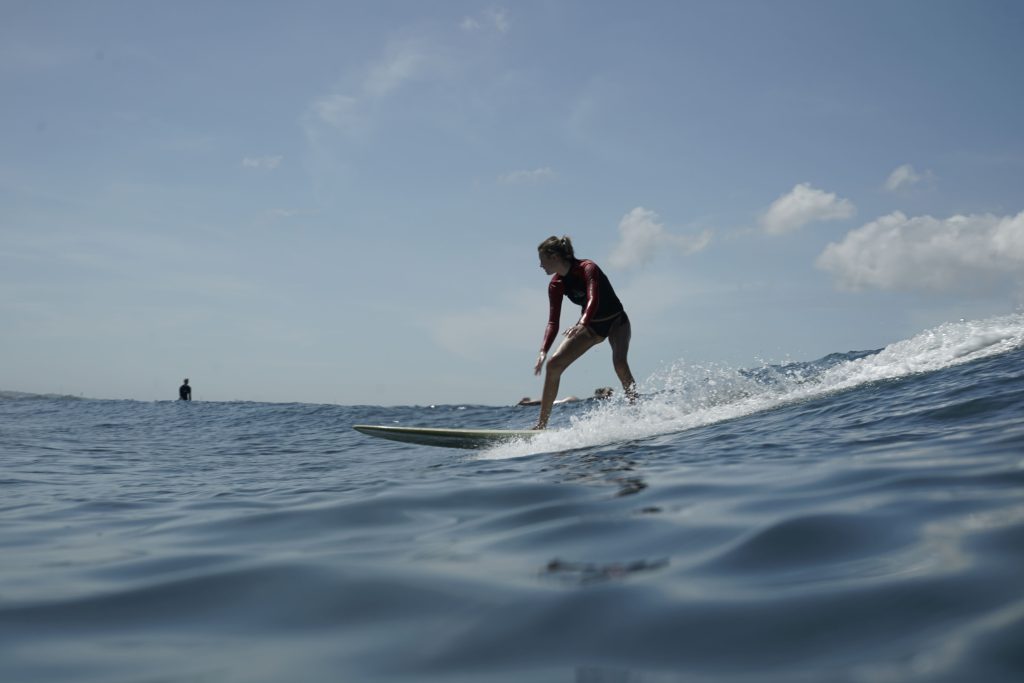
Seminyak gets overshadowed a bit by its neighbor Kuta when people talk about beginner-friendly surf in Bali — but it’s genuinely one of the better spots on the island, and it has its own personality worth knowing about before you paddle out. Here’s the full picture.
What Is Seminyak, and Where Is It?
Seminyak Beach sits on Bali’s southwest coast, directly adjacent to Kuta, forming part of the same long, continuous stretch of sandbar coastline. It’s a beach break — meaning the wave shape is shaped by shifting sand rather than a fixed reef — with punchy sand peaks that dump onto a wide, open beach.
Is Seminyak Good for Beginners?
Yes — Seminyak is rated Beginner to Intermediate, and it’s a legitimately good spot to learn. It’s a sand-bottom beach break, free of the sharp coral or rock hazards that come with reef surfing, which makes it forgiving while you’re still building early muscle memory for paddling and popping up.
One nuance worth knowing: Seminyak tends to produce faster, punchier walls than Kuta. If you’re a true first-timer picking between the two, Kuta’s slightly gentler shifting sand peaks might be the more forgiving starting point — but once you’ve got a session or two of whitewater and green-wave experience under you, Seminyak’s extra punch makes it a great next step before moving on to something like a reef break.
What Are the Wave Conditions Like at Seminyak?
The One Thing to Watch: Low Spring Tides
Seminyak dumps heavily on low spring tides — meaning the wave breaks abruptly onto shallow sandbanks rather than peeling gently. This is the single most important timing detail for anyone surfing here, beginner or otherwise: check the tide before you go, and favor mid-to-high tide sessions for a friendlier, more forgiving wave.
Best Time of Day to Surf Seminyak
Like most of Bali’s west-facing coast, mornings are the move. Winds tend to be calmest right after sunrise, before the trade winds build through the late morning and early afternoon and start creating chop and sideshore wind on west coast beach breaks. An early session at Seminyak will almost always be cleaner than a midday one.
What Board Should You Use at Seminyak?
Same logic as any beginner-to-intermediate beach break: a bigger-volume soft-top or foam longboard is the standard choice while you’re still building your pop-up and balance, since it floats higher and catches waves earlier. As you progress and Seminyak’s punchier walls start to feel manageable, it’s a reasonable place to start transitioning toward a smaller, more performance-oriented board — the faster wave gives you a bit more to work with than a fully mellow break would.
Safety Considerations at Seminyak
Lessons and Coaching at Seminyak
Seminyak is a well-served spot for structured lessons — Surf Journey Bali operates here (alongside Kelan Airport and Uluwatu locations), offering twice-daily guided sessions, a multi-tier beginner curriculum, and video analysis, catering to all levels from complete beginners through advanced surfers.
Final Word from Your Coach
Seminyak is a great example of a spot that rewards a little bit of tide awareness — get the timing right and it’s one of the friendlier, more consistent beach breaks in Bali, with just enough extra punch to keep things interesting once Kuta starts feeling too mellow. Check the tide, go early, and it’s a genuinely great place to build real surfing skill.
Want a coach to make sure you’re catching Seminyak on the right tide and getting proper feedback on your pop-up? At Surf Journey Bali, we’ll match your session to the conditions and get you progressing with real guidance in the water.

Yosua is a surf enthusiast with over 5 years of chasing waves across Bali’s iconic coastlines. From West coast to East coast of Bali, he’s spent years exploring what makes Bali one of the world’s greatest surf destinations. Through Surf Journey Bali, Yosua shares honest guides, local tips, and surf travel insights to help both beginners and seasoned wave-riders make the most of their Bali surf experience.