
Padang Padang is famous for two very different reasons — as the beach made globally recognizable by Eat, Pray, Love, and among surfers, as the site of one of Bali’s heaviest, most technical barrels. What most visitors never realize is that both reputations are true at once, in the same small bay, just meters apart from each other. Understanding that split is the key to understanding this spot.
Where Is Padang Padang?
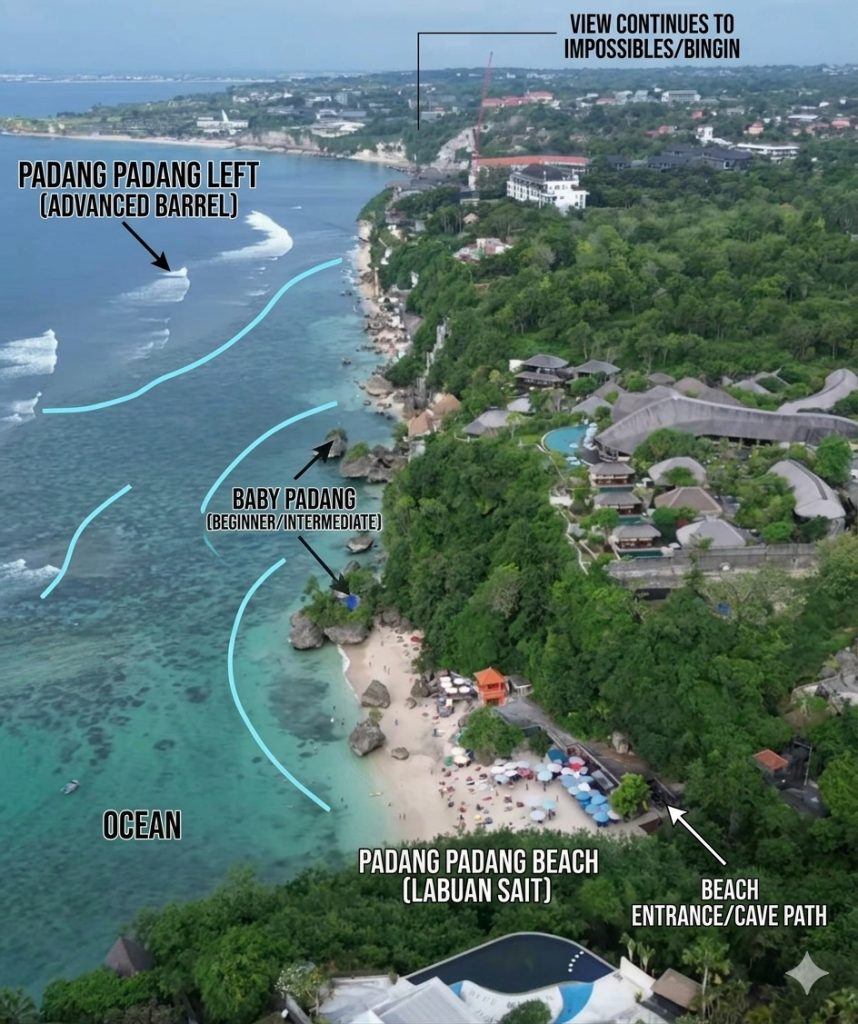
Padang Padang sits on the West Bukit, part of the same stretch of dry-season coastline that includes Bingin, Impossibles and Uluwatu. It’s one of the busier corners of the island once the season peaks — dry-season swell reliably draws a crowd here, alongside neighboring Bingin and Batu Bolong. If you’re hoping to beat the crowd, the same rule applies here as anywhere on this coast: an early, dawn-patrol session gets you noticeably more space than a midday one.
The Left: Bali’s “Balinese Pipeline”
This is the wave Padang Padang is best known for among surfers, and it earns every bit of its reputation. Classified strictly as expert-level, it needs a genuine southwest groundswell — typically 6 to 12 feet or bigger — and works best from mid to low tide. As the swell hits the outer point, the seafloor drops off steeply into deep open ocean before slamming into an abrupt, shallow shelf, drawing water straight off the dry reef flat and throwing the wave into an intense, square cylinder.
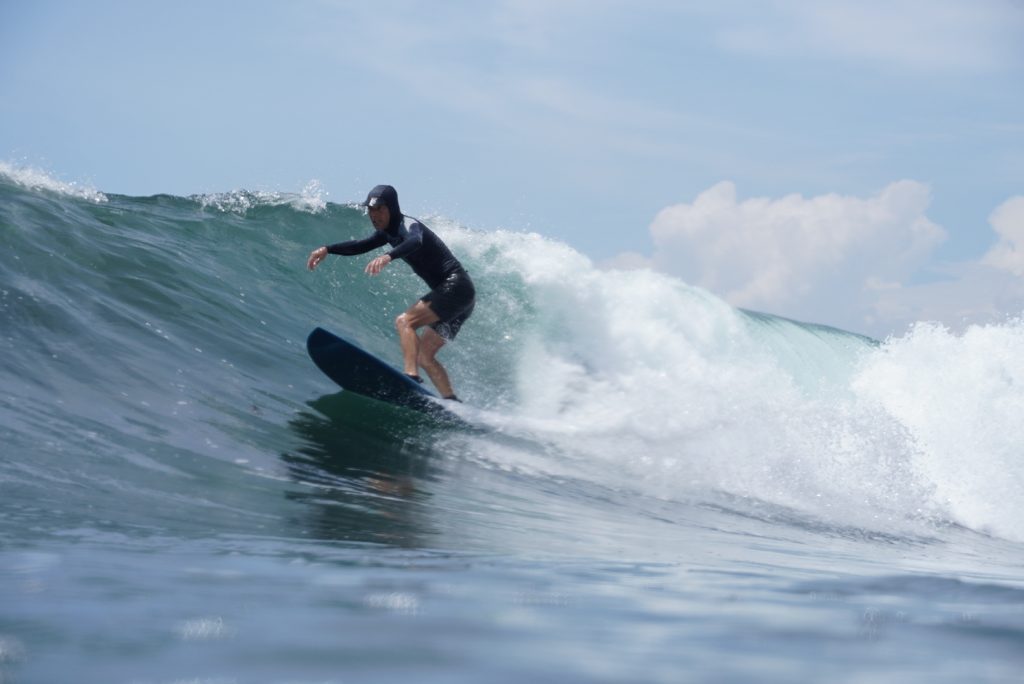
The takeoff is steep and late, demanding immediate rail engagement the instant you drop in, followed by high-speed tube riding through a round, heavy barrel. There’s virtually no margin for error here — this is a wave that punishes hesitation and rewards only precise, well-practiced technique. It’s not a wave to work up to casually; it’s one you arrive already prepared for.
Baby Padang: The Nursery Right Next Door
Here’s the twist that makes this bay genuinely unique. Just around the same headland, sheltered inside the bay’s adjacent waters, sits Baby Padang — a completely different wave shaped by the very same swell. As that outer swell energy wraps around the southern point, it diffuses across a deeper, mixed sand-and-coral bottom, transforming into a gentle, rolling right-hand shoulder that peels safely toward a deep-water channel.
Classified as beginner-to-intermediate, Baby Padang wants a smaller 3-to-6-foot SW swell and works best from mid to high tide — the opposite tide window from its heavy neighbor. It’s soft, forgiving, and genuinely well-suited to practicing pop-ups and trimming on real green waves, all happening within sight of one of the most demanding barrels in Bali.
Why the Same Bay Produces Two Opposite Waves
The explanation comes down to underwater terrain. The outer point’s steep drop into deep water is what gives the Left its violent, hollow power — the sudden shift from deep to shallow water forces the wave to throw hard and fast. Baby Padang, by contrast, sits behind a natural buffer of headland and a gentler, mixed bottom, which spreads and softens that same swell energy before it ever reaches the inside break. Same ocean, same swell, two entirely different outcomes — purely a function of what lies beneath the surface.
Tide and Timing: Read This Carefully
Tide affects these two waves in opposite ways, which is worth knowing before you plan a session:
- The Left wants mid-to-low tide. Lower water over the reef accelerates wave speed and pitches the lip into a hollower tube — exactly what experienced tube-riders are chasing here, though it also means less water covering an already shallow, unforgiving reef.
- Baby Padang wants mid-to-high tide, which keeps the inside section soft and safe for less experienced surfers.
There’s one more safety detail worth knowing if you’re navigating the channel at Padang Padang: tidal currents don’t move at a constant rate. Water movement through narrow reef passes peaks during the middle two hours of each tidal transition, meaning rip current strength through the Padang Padang channel is significantly stronger in that window than right at the top or bottom of the tide. Planning your entries and exits around this rhythm — rather than assuming the current is constant — matters more here than at a typical beach break.
Who Should Surf Which Wave
This isn’t really a question with a gray area. The Left demands genuine expert-level tube-riding ability and an intimate understanding of shallow reef navigation — attempting it without that experience isn’t a matter of a hard lesson, it’s a matter of real physical danger. Baby Padang, meanwhile, is exactly what its name suggests: a legitimate, welcoming place for beginners and early intermediates to build real skill on unbroken green waves, without needing anywhere near the Left’s level of commitment.
If you’re progressing through Bali’s reef breaks — building toward tube-riding technique after cutting your teeth on gentler waves like Balangan or Batu Bolong — Padang Padang is one of the classic proving grounds coaches use for exactly that transition, alongside Bingin and Uluwatu. Baby Padang is very often the bridge that gets you there.
Local Support for Chasing the Barrel
Given the Left’s reputation, it’s no surprise the area has built up real coaching infrastructure around it — specialized barrel coaching, video review, and even boat access to outer reefs are available right in the area for surfers specifically working on their tube-riding technique here. If the Left is your goal, going in with dedicated, technical coaching rather than attempting it solo is genuinely the smarter path.
The Bottom Line
Padang Padang isn’t one wave, it’s two — an expert-only slab that shows zero mercy, and a gentle nursery wave sitting close enough to watch it from the water. Knowing which one you’re paddling out to, and reading the tide correctly for that specific wave, is everything here. Get it right, and this bay offers something for nearly every stage of a surfing journey, just not on the same swell.
Whether you’re ready for the Left or just getting comfortable on green waves at Baby Padang, tell us your level and we’ll make sure you’re in the right corner of this bay.

Yosua is a surf enthusiast with over 5 years of chasing waves across Bali’s iconic coastlines. From West coast to East coast of Bali, he’s spent years exploring what makes Bali one of the world’s greatest surf destinations. Through Surf Journey Bali, Yosua shares honest guides, local tips, and surf travel insights to help both beginners and seasoned wave-riders make the most of their Bali surf experience.