
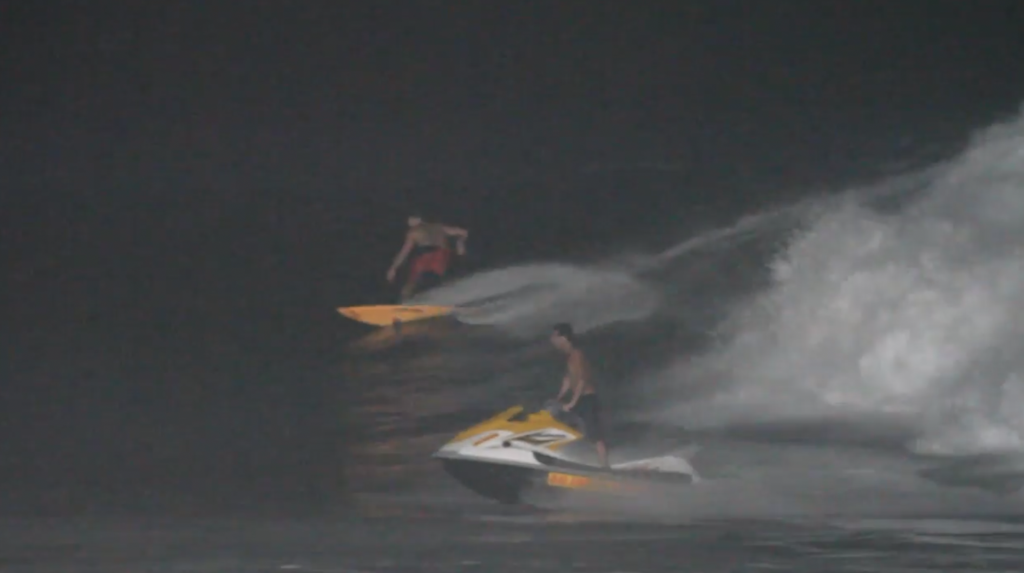
I get asked about this one a lot once people find out it exists — surfing Keramas after dark, under floodlights. It sounds like a novelty until you actually look into it, and it turns out to be a real, specific offering worth understanding properly before you book it. Here’s the full picture.
What Is Night Surfing at Keramas?
Night surfing at Keramas centers on Hotel Komune, a resort built right in front of the break, which runs what it describes as the world’s first permanent night surfing installation — a floodlit setup that lights the wave after dark so surfers can ride it, and spectators can watch it, at night.
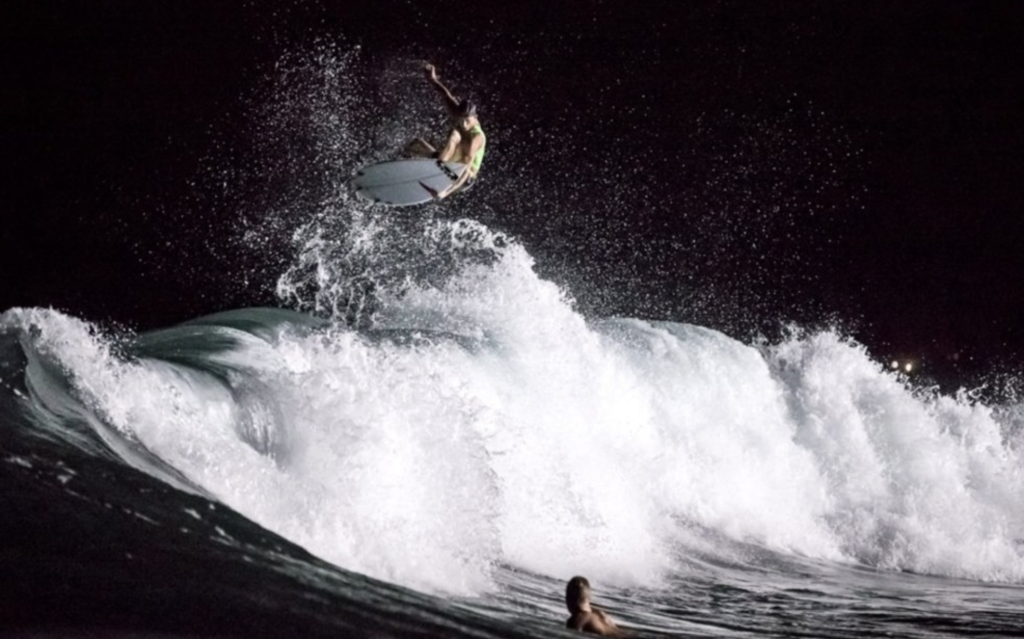
Image by: komuneresorts.com
This isn’t something available at just any point along the Keramas coastline — it’s specifically Komune’s installation, right off the sand in front of the resort.
Why Keramas, of All Places?
Keramas has the credentials for this kind of spotlight treatment. It’s a fast, barrelling right-hand reef break on Bali’s east coast, breaking over black volcanic sand and lava reef — widely regarded as one of Bali’s premier high-performance waves, and according to Komune, the site of a World Surf League Championship Tour event. By day it’s known for a steep, hollow drop into a fast wall with an explosive lip, the kind of setup that produces genuine barrels and launches surfers into aerials.
Put floodlights on a wave with that kind of shape and power, and you get something genuinely rare in surfing — a rideable, photographable barrel after the sun’s gone down.
How Komune’s Night Surfing Actually Works
A few practical details worth knowing:
- Sessions run nightly from 7:00 PM to midnight, with an additional early window from 4:00 AM to 6:00 AM for surfers who want a pre-dawn session instead.
- Bookings are capped at 6 surfers per session, which keeps the lineup genuinely uncrowded — a real point in its favor compared to a typical daytime session at a famous break.
- The wave breaks close to shore, with deep tube rides forming roughly 50 meters offshore.
- On select nights, local Bali Boardriders club members — including some world-class riders — put on a night surfing display, which is worth catching even if you’re not the one paddling out.
- If you’d rather watch than surf, you can catch the action from Komune’s Beach Club, or from beachside villas with direct ocean views.
Is Night Surfing at Keramas Safe? Who Is It For?
Be honest with yourself here: Keramas is a powerful reef break suited mainly to intermediate and advanced surfers during the day — floodlights don’t change the wave itself, only how much of it you can see. A few things worth weighing before you book:
- This isn’t the place to meet Keramas for the first time. If you haven’t surfed this wave (or a comparably powerful lava-reef break) in daylight, a night session isn’t the moment to find out how it handles.
- The small group cap is a genuine safety upgrade. Six surfers max means far less collision risk and far more room to read the wave than a crowded daytime lineup — this is one of the more compelling arguments in favor of trying it once you’re ready.
- Floodlights help, but they don’t replace daylight. Depth perception, reading the lip, and spotting where the reef sits underneath you are all naturally harder under artificial light than under the sun, even with strong lighting. Go in expecting a genuinely different sensory experience, not simply “daytime Keramas but darker.”
- Standard reef-break precautions still apply — the lava reef bottom, the need for a committed takeoff, and general current awareness don’t go away just because it’s dark and floodlit.
If you’re already a confident, experienced reef surfer who knows Keramas (or a wave like it) well in daylight, night surfing here is a genuinely unique add-on to a trip. If you’re not quite there yet, it’s worth treating as a goal rather than a starting point.
Best Time of Year to Plan a Trip Around It
There’s a bit of nuance worth knowing here. General Bali surf patterns suggest Keramas, on the east coast, tends to benefit from the wet season’s northwest winds, which blow offshore on that side of the island. Komune’s own site, however, states that Keramas is most consistent from April to October, with offshore morning winds and strong swell — while adding that the wet season can still produce great waves, particularly on early, glassy mornings. Since Komune sits directly on the break, their read on day-to-day and season-to-season conditions is worth weighing heavily if you’re planning a trip specifically around this wave — it’s worth checking current conditions with them directly before you commit to dates.
What Board Should You Bring?
Same logic as daytime Keramas: this is a performance shortboard wave, rewarding a board with enough rocker and rail control to handle a steep, critical takeoff and a fast wall. Night surfing doesn’t change this — if anything, having a board you’re already completely comfortable on matters even more when your usual visual cues are reduced.
Booking and Practical Info
Night surfing sessions are run directly through Hotel Komune, given the installation is theirs and spots are limited to six surfers a night. The resort also offers day-session surf lessons and board hire through its on-site Surfers Warung, depending on experience level — a sensible way to build or confirm your comfort with Keramas in daylight before considering a night session.
Final Word from Your Coach
Night surfing at Keramas is a genuinely unusual, well-executed piece of surf infrastructure — floodlit barrels, a deliberately small lineup, and a wave that already has the pedigree to make it worthwhile. Just make sure you’re bringing real daytime experience on a wave like this to the table first; the dark is a much better environment to showcase skill you already have than to build it from scratch.
Want help making sure you’re genuinely ready for a wave like Keramas before you try it under floodlights? At Surf Journey Bali, we’ll get your reef-break fundamentals dialed in during the day, so a night session becomes the highlight of your trip rather than the riskiest part of it.

Yosua is a surf enthusiast with over 5 years of chasing waves across Bali’s iconic coastlines. From West coast to East coast of Bali, he’s spent years exploring what makes Bali one of the world’s greatest surf destinations. Through Surf Journey Bali, Yosua shares honest guides, local tips, and surf travel insights to help both beginners and seasoned wave-riders make the most of their Bali surf experience.