
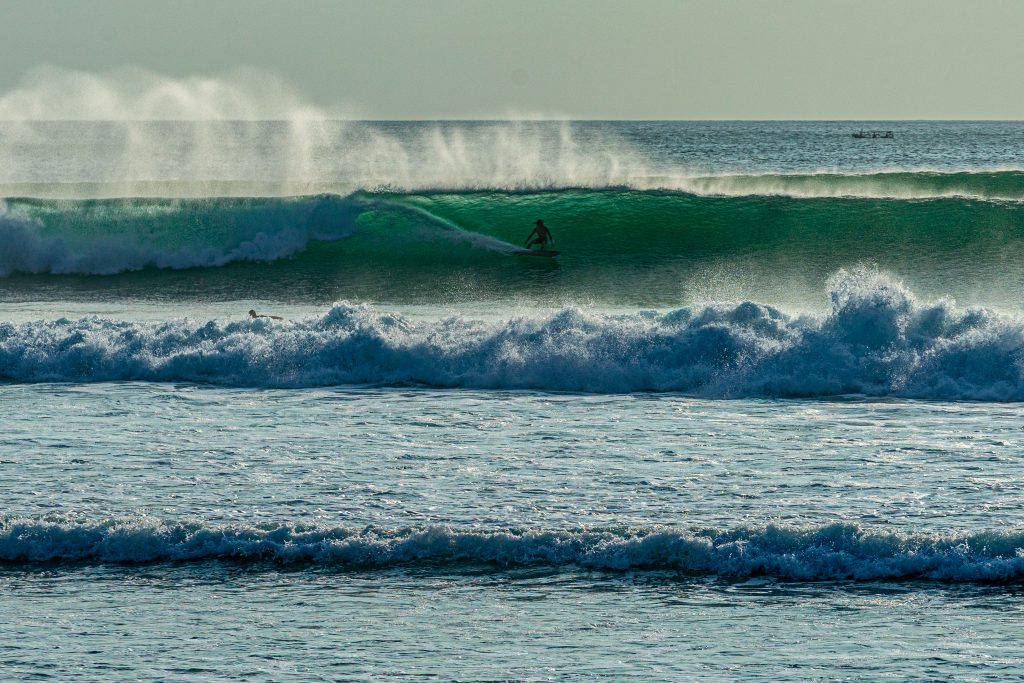
Nyang Nyang stays quiet compared to most of the Bukit’s other breaks, and once you understand what’s actually involved in surfing it, it’s easy to see why. It’s a genuinely powerful, remote wave — here’s what matters before you consider paddling out.
What Is Nyang Nyang Beach, and Where Is It?
Nyang Nyang is a reef break on the South Bukit Coast, sitting in open, exposed water that takes raw Southern Ocean swell energy head-on, with little coastline or headland shelter to soften it before it arrives.
Is Nyang Nyang Beach Good for Beginners?
No. Nyang Nyang is rated Advanced to Expert, and every part of its profile backs that up: an exposed swell trap, fast and shifting peaks over a reef-and-sand bottom, heavy rip currents, and a steep, surging shorebreak that crashes straight onto the sand. This isn’t a wave to learn on — it’s one for surfers who already handle powerful, unpredictable open-ocean conditions with confidence.
What Are the Wave Conditions Like at Nyang Nyang?
- Wave type: Shifting, fast reef-and-sand peaks, with a steep, surging shorebreak near the sand
- Swell size: Rated 2–5 ft — though don’t take that number at face value (more below)
- Swell direction: South/southwest
- Best tide: Mid to high tide
- Consistency: Works year-round
The Forecast Here Can Be Deceiving
This is the detail every surfer should understand before checking a swell app and deciding Nyang Nyang looks manageable. Because it’s such an exposed swell trap, this beach takes raw ocean energy and amplifies it — a swell that reads small and friendly at other Bali spots can turn into genuinely overhead surf here. Don’t use a modest number as your green light. This is exactly the kind of local knowledge worth getting from someone who’s surfed it before, rather than trusting the forecast alone.
Safety at Nyang Nyang
- Currents are the defining hazard. If a rip grabs you, don’t swim straight back toward shore — swim sideways across it until you’re clear, then head in.
- The peaks constantly shift. There’s no single fixed takeoff spot here, so positioning takes active, ongoing reading of the wave rather than sitting still and waiting.
- The shorebreak carries its own risk. Near the sand, the wave turns steep and surging, crashing directly onto the beach with turbulent backwash — treat entries and exits with as much care as the lineup itself.
- It’s a reef-and-sand bottom. Fall the way you would at any reef break: go flat and spread out rather than diving or bracing with a foot, and cover your head until you resurface.
Getting There
Nyang Nyang is known for genuinely challenging access — this isn’t a beach you casually wander down to, and that difficulty is a big part of why it stays quieter than other Bukit spots. Build the walk in and out into your plan for the day rather than treating it as an afterthought, and go with someone who already knows the route, the current conditions, and where the exits are. This isn’t a solo, first-visit kind of spot.
Who Should Surf Nyang Nyang?
Experienced surfers who are genuinely comfortable with powerful, shifting open-ocean peaks and strong currents — ideally guided by someone with direct knowledge of the access and the day’s conditions. If you’re still building your reef-break résumé, there are plenty of excellent, more accessible Bukit waves to develop on first. Nyang Nyang is one to add once you’re truly ready, not before.
Final Word from Your Coach
Nyang Nyang demands respect in equal measure to what it offers — a genuinely exciting, powerful wave that punishes anyone who underestimates the deceptive swell size, the shifting peaks, or the walk required to get there. If it’s on your list, go with someone who knows it, and be honest about whether your current level actually matches what it demands.
Wondering whether a wave like Nyang Nyang fits where you’re at right now? At Surf Journey Bali, we’ll give you an honest read and help you build toward Bali’s more exposed, powerful breaks with real local knowledge alongside you.

Yosua is a surf enthusiast with over 5 years of chasing waves across Bali’s iconic coastlines. From West coast to East coast of Bali, he’s spent years exploring what makes Bali one of the world’s greatest surf destinations. Through Surf Journey Bali, Yosua shares honest guides, local tips, and surf travel insights to help both beginners and seasoned wave-riders make the most of their Bali surf experience.