
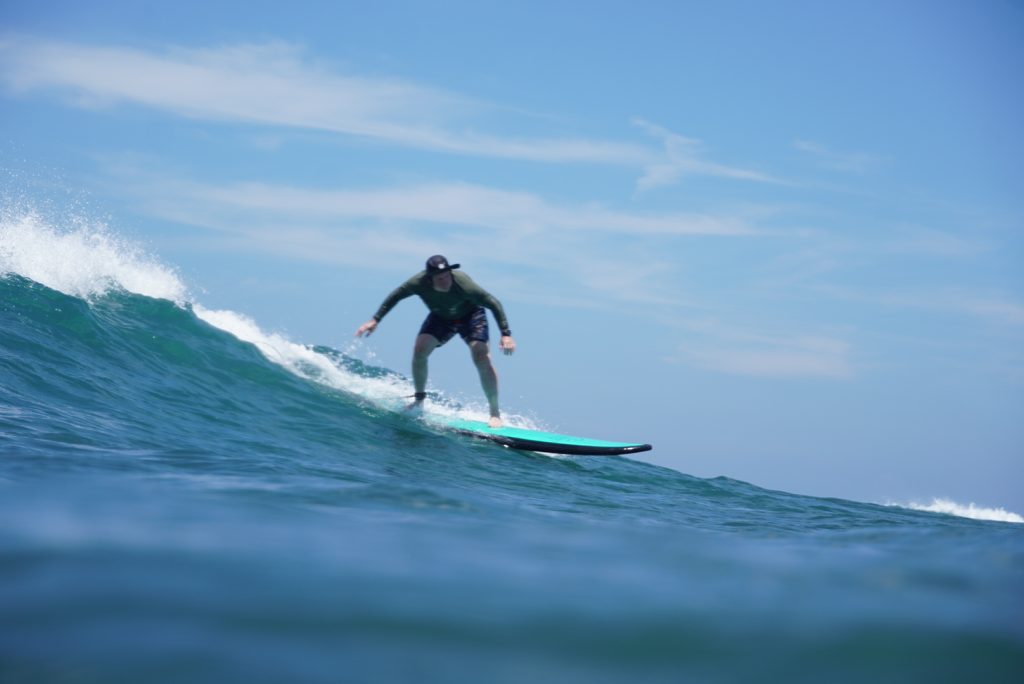
Tucked into the Bukit Peninsula between two of Bali’s most famous reef breaks, Dreamland stands out as one of the more unusual waves on this stretch of coastline — and one of the more versatile. Here’s everything you need to know before paddling out.
Where Is Dreamland Beach?
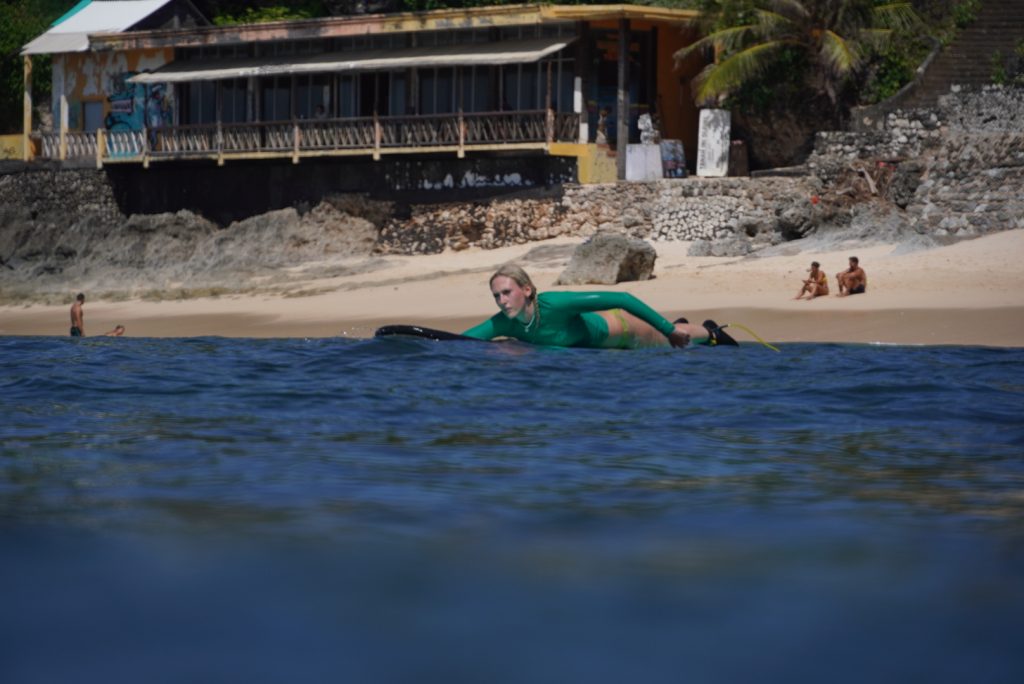
Dreamland sits on the Bukit Peninsula in South Bali, bordered by Balangan to the north and Bingin to the south. It’s also known locally as New Kuta, a name tied to the large golf resort development built along this stretch of coastline decades ago. From Bali’s airport, it’s roughly 8 kilometers away — typically a 30-to-40 minute drive, longer during peak traffic hours. To reach the water, you’ll park at the clifftop and walk down a set of stairs past a handful of small shops, usually paying a small entrance fee along the way.
What Makes This Wave Different
Almost every other break along this part of the Bukit — Balangan, Impossibles, Bingin — is a left-hand reef break. Dreamland breaks the pattern, literally: it peels in both directions, with rideable lefts and rights depending on which section you’re on. It’s also not a true coral reef break. The bottom is a mix of sand and flat limestone rock, which makes it noticeably more forgiving than the sharp coral ledges found at its neighboring breaks — though it’s still firmer underfoot than a pure sand-bottom beach, so it sits somewhere in between.
The Different Sections
Dreamland isn’t one single wave — it’s a bay with several distinct peaks, each suited to a different tide, swell size, and skill level:
- The Outside Left: Toward the south end of the bay, this is a low-tide wave that can link all the way through into the inside section on a good day. There’s a boil to watch for here — on smaller days, take off deeper than it; on bigger days, take off on the shoulder instead.
- The A-Frame: The centerpiece of Dreamland, sitting mid-bay. It offers a short, punchy right that fades into a deep channel, and a faster left capable of barreling on takeoff. On smaller, head-high-and-under days it’s soft and manageable; once it gets overhead and beyond, it turns into a genuinely heavy, fast-breaking wave that can snap boards — often compared to Sunset Beach in Hawaii.
- The Right: Further along the reef, shorter and fattening into the channel, though on the right day it can run impressively far toward the beach.
- The Inside Section: Close to shore, this softer wave breaks both left and right, punchy and popular with local groms who use it to launch airs. It occasionally throws a barrel too.
- The Mid-Tide Softener: Between the A-frame and the Balangan side, there’s a gentler section that only works around mid tide — smaller than the A-frame and considerably more forgiving, capable of reforming from whitewater back into a rideable green wave.
Best Tide
Dreamland is generally at its best around low tide, when the wave breaks with the most consistent shape across its sections; the outside peaks barely break at all once the tide pushes above roughly 2 meters. Because the wave breaks over a flat rock shelf, it behaves in an interesting way relative to size: on smaller days the water sits deeper relative to the wave, keeping things mellow, while on bigger days the same shelf becomes shallow relative to the wave, making conditions noticeably more powerful and hollow.
Best Wind, Swell, and Season
Dreamland wants offshore wind blowing from the east, paired with a groundswell approaching from the southwest — the combination that produces its cleanest, best-shaped waves. It’s a fairly consistent break, handling swell anywhere from around 2 to 6 feet and staying rideable (if intense) even beyond that.
The dry season, roughly May through October, is the most reliable stretch, with August typically standing out as the most consistent month of clean, surfable conditions. The wet season (November to April) brings more onshore wind and less predictability, though smaller, fun sessions can still be found here on the right day — worth checking often if you’re staying nearby.
Who Should Surf Here
Part of what makes Dreamland special is that it genuinely offers something across skill levels, provided you match yourself to the right section and swell size:
- Beginners can have a good time here on small days, particularly on the softer inside and mid-tide sections — though it’s worth knowing this is a rock-and-sand break rather than a pure sand-bottom beginner beach, so it’s a step up from a spot like Kuta or Seminyak. Going with an instructor for your first session here is a smart call.
- Intermediate surfers tend to find their sweet spot at the A-frame on small-to-moderate swell, and on the higher-tide left-hander south of the frame.
- Advanced surfers get their reward when the swell picks up — the A-frame at overhead-plus becomes a genuinely serious, fast, hollow wave for those chasing a real challenge.
Hazards to Know
Submerged rocks are present around the bay, and the boil near the outside left is worth respecting rather than surfing straight over. On very large swells, sections can close out entirely — still rideable for those with the experience and nerve, but not the day for a first attempt. Crowds build here too, since the wave’s versatility draws surfers of every level; it’s rarely as packed as Uluwatu, but it’s not a quiet, empty lineup either.
Getting There and What’s Around
Beyond the stairs down from the clifftop parking area, Dreamland has a genuinely comfortable setup for a beach day: beachfront warungs for food and drinks, sun loungers and umbrellas for rent, and basic restroom and shower facilities. At low tide, it’s even possible to walk along the sand all the way around to Bingin Beach if you feel like exploring further.
The Bottom Line
Dreamland earns its spot on the map by being genuinely different from its reef-break neighbors — a wave that peels both ways, softens into a beginner-friendly shoulder on small days, and turns into a serious, Hawaii-style test once the swell fills in. Knowing which section suits your level, and timing your session around the low tide, is the key to getting the most out of it.
Want to surf Dreamland with someone who knows exactly which section and tide window fits your level? Book a guided session with us and we’ll put you in the right spot at the right time.

Yosua is a surf enthusiast with over 5 years of chasing waves across Bali’s iconic coastlines. From West coast to East coast of Bali, he’s spent years exploring what makes Bali one of the world’s greatest surf destinations. Through Surf Journey Bali, Yosua shares honest guides, local tips, and surf travel insights to help both beginners and seasoned wave-riders make the most of their Bali surf experience.