
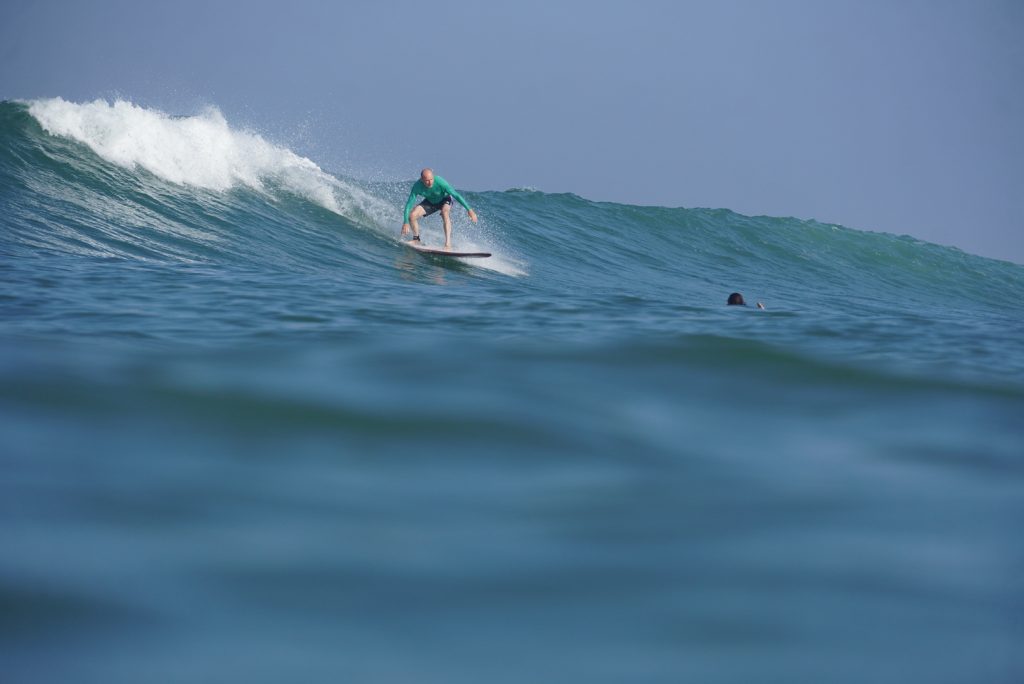
Medewi comes up a lot when students ask me “where do I go once beach breaks start feeling too easy?” It’s one of the best answers on the island — a long, rolling point break that’s built almost perfectly for that exact stage of progression. Here’s everything worth knowing before you go.
What Is Medewi, and Where Is It?
Medewi is a point break on Bali’s west coast, roughly two hours northwest of Kuta. Rather than a scattered set of separate peaks, Medewi is really one continuous wave: a cobblestone point break peeling off a boulder-strewn river delta. On a good swell, it produces a long, soft left-hander that can roll for anywhere from 400 to 800 meters — one of the longer rideable waves on the island.
Is Medewi Good for Beginners?
Medewi is rated an intermediate wave, and it’s widely considered a premier venue for intermediate progression specifically. It’s not the spot for your very first sessions — the bottom is boulder and cobblestone, not the sand you want underfoot while you’re still working on your pop-up. But once you’re already comfortable catching green waves and steering with some confidence, Medewi is one of the best “next step” waves in Bali.
What Are the Wave Conditions Like at Medewi?
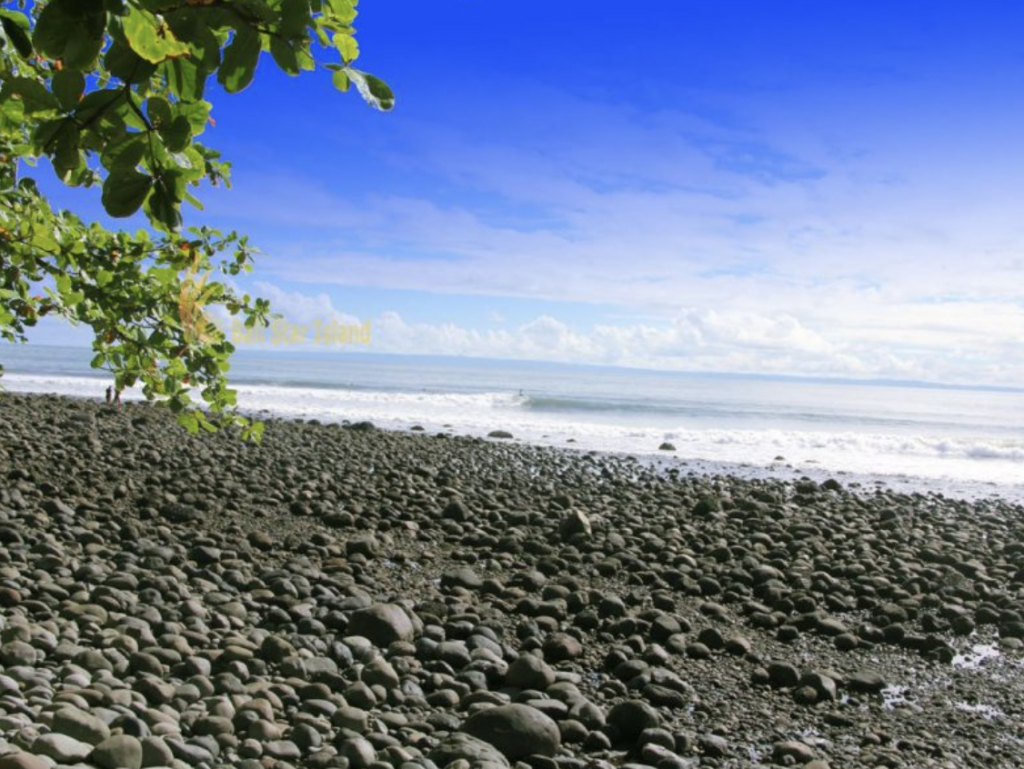
Image by: balistarisland.com
That year-round consistency is a real asset — Medewi isn’t a wave you have to chase during one narrow seasonal window, and morning sessions here are reliably good, which makes it an easy addition to a trip itinerary regardless of when you’re visiting.
What Can You Actually Practice at Medewi?
This is where Medewi earns its reputation. Its gentle pace and open, unbroken wave face give surfers time — real, usable time — to work on the skills that beach-break whitewater can’t teach:
If you’ve been riding whitewater and short beach-break rides so far, Medewi’s long, manageable walls are exactly the kind of canvas that turns “I can stand up” into “I can actually surf.”
What Board Should You Ride at Medewi?
Medewi is a longboard– and mid-length-friendly wave. Its long, open-face point-break nature rewards boards that can generate speed and hold rail-to-rail carves through extended turns, rather than short, punchy performance boards built for quick, critical sections. If you’re transitioning from a beginner soft-top toward your first “real” board, a point break like this is a great place to put a slightly smaller, more performance-oriented board to work.
Safety Considerations at Medewi
Coaching and Camps at Medewi
Medewi is well-served for structured coaching if you want it, focuses specifically on long-wave positioning and open-face carving, which lines up exactly with what Medewi is best for teaching. If you’re at the stage where you’re trying to genuinely build bottom-turn and cutback mechanics rather than just catch waves, having a coach watch you across a long, repeatable ride like this is enormously useful — you get far more usable feedback per wave than you would in short beach-break bursts.
Getting There
Medewi sits on Bali’s west coast, about two hours northwest of Kuta — far enough that it’s typically a dedicated day trip or an overnight stay rather than a quick add-on to a South Bali-based trip. Given its year-round consistency and best-in-the-mornings pattern, it’s worth planning an early start.
Final Word from Your Coach
Medewi is one of the clearest “graduation waves” in Bali — long enough, soft enough, and consistent enough to actually let you practice real surfing, not just catch whitewater. If you’ve got your pop-up dialed in and you’re ready to start working on turns, this is exactly the kind of wave to build that next stage of your surfing on.
Ready to make the jump from beach breaks to a point break like Medewi? At Surf Journey Bali, we’ll make sure your fundamentals are solid first, then get you out there with proper coaching on the exact skills a wave like this is built to teach.

Yosua is a surf enthusiast with over 5 years of chasing waves across Bali’s iconic coastlines. From West coast to East coast of Bali, he’s spent years exploring what makes Bali one of the world’s greatest surf destinations. Through Surf Journey Bali, Yosua shares honest guides, local tips, and surf travel insights to help both beginners and seasoned wave-riders make the most of their Bali surf experience.