
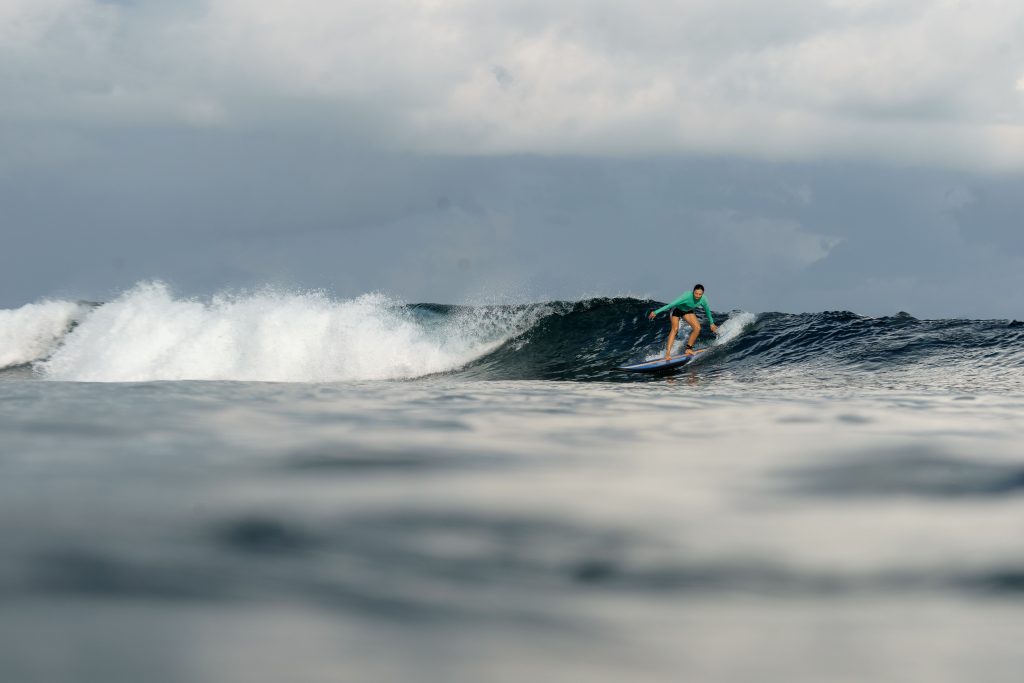
Ask any high-performance surfer in Bali where they go when the west coast goes flat or blown-out, and Keramas comes up almost immediately. It’s one of the island’s most respected waves — and one of the most misunderstood by traveling surfers who assume “east coast” means “easier.” Here’s what you actually need to know.
What Is Keramas, and Where Is It?
Keramas is a right-hand reef break on Bali’s east coast, breaking over a black volcanic sand and lava reef bottom. Unlike the limestone coral shelves that define the Bukit Peninsula’s west-side breaks, Keramas’ lava-reef bottom produces a distinctly steep, hollow drop straight into an open barrel — one that then accelerates into a fast wall and an explosive vertical lip, making it a natural launch pad for aerials. It’s widely regarded as Bali’s premier high-performance right-hander for exactly this reason.
Is Keramas Good for Beginners?
No. Keramas is rated Advanced to Expert. This isn’t a wave to learn fundamentals on — it’s a steep, hollow, high-speed break that rewards surfers who already have strong reef-break experience and can handle a critical, fast takeoff. If you’re newer to surfing, this is one to watch from the beach (genuinely worth doing — it’s a great wave to spectate) rather than paddle out on, until your reef-break foundations are solid elsewhere.
What Are the Wave Conditions Like at Keramas?
Why Keramas Works When the West Coast Doesn’t
This is the single most important thing to understand about Keramas, and it’s a genuinely useful piece of Bali surf knowledge: Bali’s two coasts are seasonally out of sync with each other. During the wet season (November–March), prevailing winds shift to blow from the west and northwest. That’s onshore chop for west coast and Bukit breaks like Uluwatu and Bingin — but it’s clean, offshore wind for the east coast, including Keramas. So while much of the island’s famous west-side surf is getting blown out or going flat, Keramas is often firing with clean, hollow conditions.
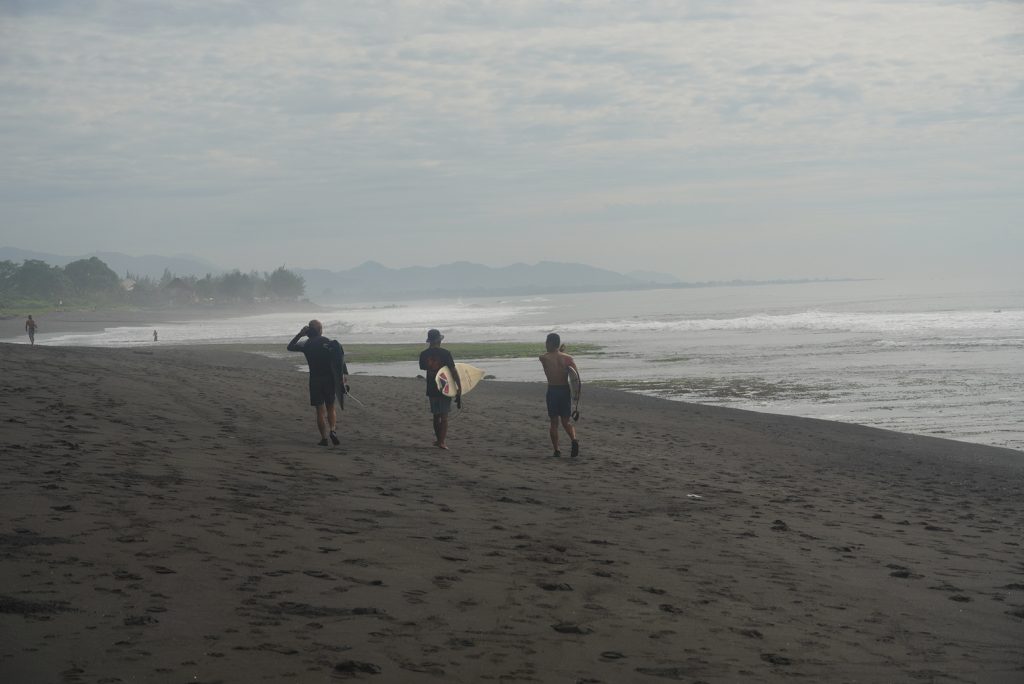
The trade-off: groundswells are somewhat less frequent on the east coast during this window than the reliable west-coast winter swells. What you get in exchange is lighter crowds and glassy morning sessions — a fair swap for a lot of surfers.
Best Time of Day to Surf Keramas
Across Bali generally, dawn patrol (roughly 6:00–9:00 AM) is the most reliable window for clean, glassy conditions before thermal winds build — and that logic holds at Keramas too, especially since a hollow, high-performance wave like this is at its best when the surface is clean rather than wind-chopped.
What Board Should You Ride at Keramas?
Keramas is a performance shortboard wave. Its steep, hollow drop and fast wall reward a board with enough rocker and control to handle a critical takeoff and hold a high line through a quickly accelerating section — this isn’t the spot for extra foam or a beginner-friendly soft-top. If you’re not already riding a performance board confidently in similar hollow reef conditions elsewhere, that’s the gap worth closing before adding Keramas to your list.
Safety Considerations at Keramas
Who Should Surf Keramas?
Confident, experienced reef-break surfers comfortable with steep, hollow takeoffs and fast walls — surfers who are already looking to push into more high-performance turns and airs rather than still building basic wave-reading skills. If that’s you, and you’re traveling during the wet season while the west coast is blown out, Keramas is exactly the kind of wave worth building your trip around.
Getting There
Keramas sits on Bali’s east coast, a different side of the island from the Bukit Peninsula/Uluwatu/Canggu cluster most first-time visitors base themselves in. If you’re staying on the west side for the famous reef breaks, plan Keramas as a dedicated east-coast day — particularly valuable to have on your radar during the wet season months when it’s firing and the west coast isn’t.
Final Word from Your Coach
Keramas rewards surfers who’ve already put the reef-break hours in elsewhere — steep, fast, and genuinely high-performance, it’s one of Bali’s best answers to a blown-out west coast. If you’re building toward a wave like this, it’s worth an honest check-in on where your reef-break skills actually stand before you make the trip east.
Want help figuring out whether you’re ready for a wave like Keramas — or want a surf coach to help you read it properly on your first session there? At Surf Journey Bali, we’ll assess your level honestly and help you build toward waves like this at the right pace.

Yosua is a surf enthusiast with over 5 years of chasing waves across Bali’s iconic coastlines. From West coast to East coast of Bali, he’s spent years exploring what makes Bali one of the world’s greatest surf destinations. Through Surf Journey Bali, Yosua shares honest guides, local tips, and surf travel insights to help both beginners and seasoned wave-riders make the most of their Bali surf experience.