
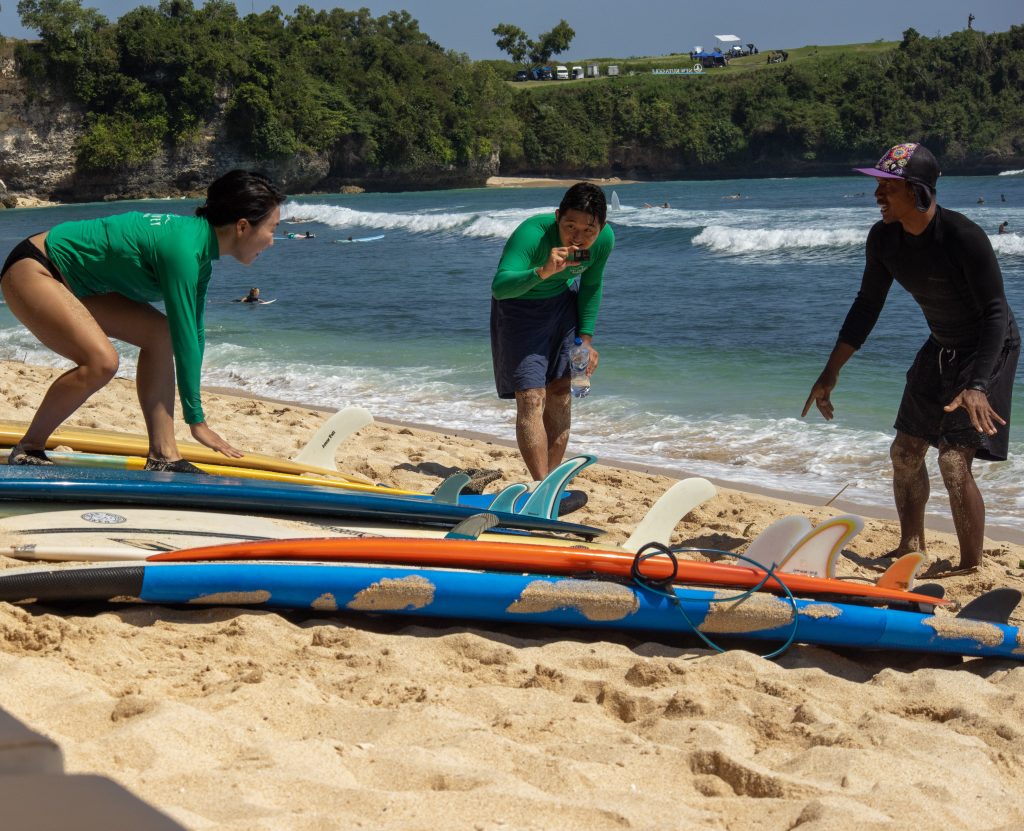
If you’ve split your Bali trip between a yoga studio in Ubud and a surf lesson in Canggu, you’re onto something more than a nice itinerary. The connection between these two practices isn’t just marketing — it’s functional. Some of Bali’s established surf camps already build mobility yoga directly into their coaching programs for exactly this reason. Here’s why the two genuinely belong together, and five poses worth adding to your practice if surfing is on your list.
Why Yoga and Surfing Are Actually the Same Skill
Strip away the obvious differences and surfing and yoga are training remarkably similar things: single-leg and asymmetrical balance, core stability under shifting conditions, and hip and spinal mobility. A surf stance is, at its core, a dynamic balance pose — constantly adjusting to a moving surface the same way you’d hold and adjust through a standing yoga posture. The crossover isn’t a stretch (pun intended); it’s a direct transfer of skill.
The 5 Poses
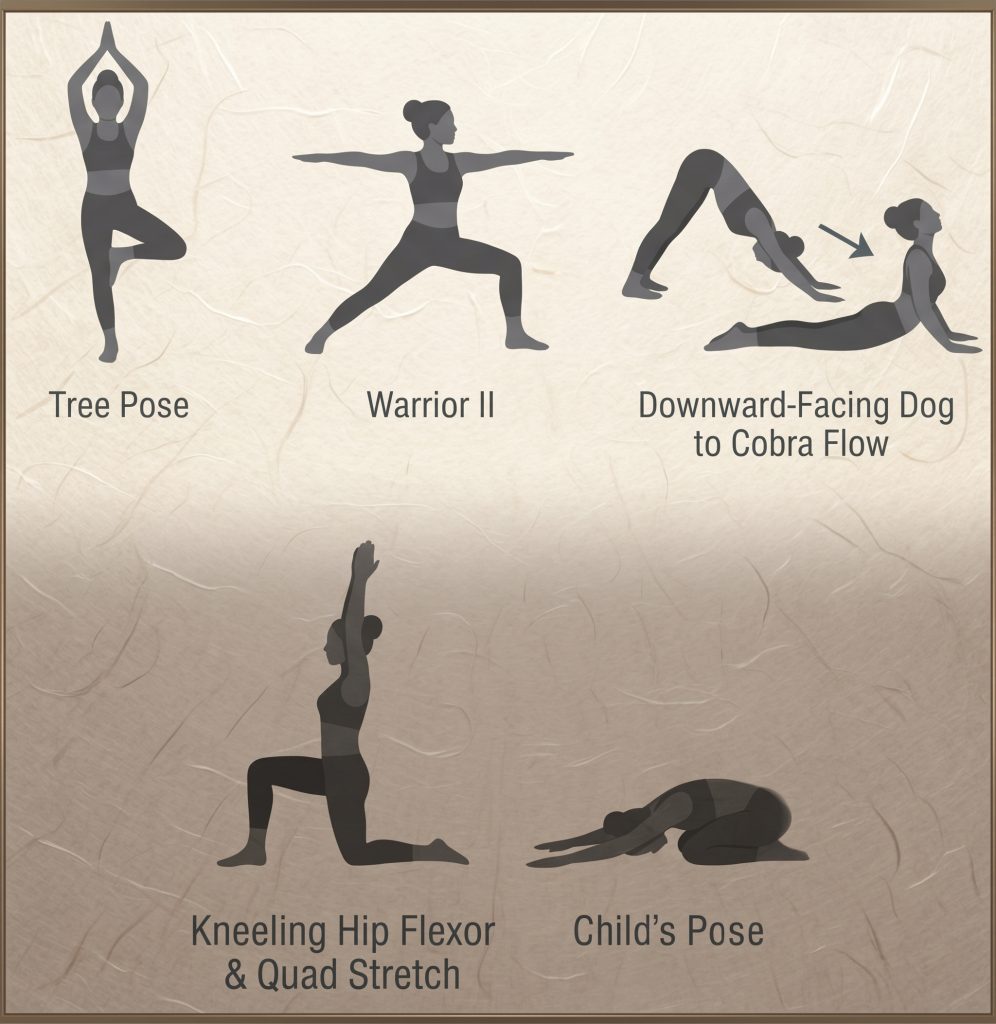
- Tree Pose (Vrksasana) Standing on one leg, plant the sole of your other foot against your inner calf or thigh (never directly on the knee joint), hands together at your chest or extended overhead. This is single-leg balance training in its purest form — the exact skill you’re relying on every time you’re standing on a moving board, constantly making small ankle and core adjustments to stay centered.
- Warrior II (Virabhadrasana II) Step into a wide stance, front knee bent to roughly 90 degrees, back leg straight, arms extended parallel to the floor, gaze over your front hand. Look familiar? This is essentially a surf stance turned into a yoga pose — low, wide, grounded through the hips, exactly the position you hold through a bottom turn or while trimming along a wave face. Practicing it builds the leg strength and hip stability that stance depends on.
- Downward-Facing Dog to Cobra Flow Move slowly between Downward-Facing Dog — hips lifted, forming an inverted V — and Cobra, lowering into a gentle backbend with your chest lifted off the ground. This flow decompresses the lower spine and restores length to the calves and hamstrings, directly countering the sustained arched-back position your spine holds through every minute of paddling.
- Kneeling Hip Flexor & Quad Stretch From a kneeling lunge, drop your back knee down and shift your hips gently forward, feeling the stretch along the front of your hip and thigh. This targets exactly the muscles that shorten from sitting straddled on your board between waves — tight hip flexors quietly limit how low and stable your surf stance can actually be, so keeping them mobile pays off directly in the water.
- Child’s Pose (Balasana) Kneel and fold forward, arms extended or resting alongside your body, forehead down. Beyond the physical release through your lower back and lats, this pose does real work for your nervous system — it’s a genuinely effective way to settle yourself, whether that’s after a physically demanding session or before paddling out if pre-surf nerves have your heart rate up.
When to Practice These
Worth knowing before you build these into your routine: static poses like the cobra flow, hip flexor stretch, and child’s pose are best done as a slow, held practice — 30 to 60 seconds per pose — either well before your session (a morning yoga class hours ahead of an afternoon lesson works great) or afterward as genuine recovery. Holding static stretches immediately before paddling out actually works against you, temporarily reducing muscular power output right when you need it most. Save those three for your studio session or your post-surf cool-down, not the five minutes before you grab your board.
Tree Pose and Warrior II are a little different — they’re active, strength-building postures rather than passive stretches, so they work well as part of a regular practice at any time, building the balance and stability that carries directly into your surfing over weeks and months, rather than something you’re relying on right before a single session.
Where to Practice
This is exactly the kind of pairing Bali is built for. Spend a morning at one of Ubud’s or Canggu’s countless yoga studios working through a flow like this, then head to the water in the afternoon once your body is warmed up, mobile, and centered. It’s a genuinely complementary rhythm, not just a convenient scheduling coincidence — and it’s part of why some of the island’s established surf camps have already folded mobility yoga directly into their coaching programs rather than treating it as a separate activity.
The Bottom Line
Yoga and surfing aren’t a trendy pairing dreamed up for Instagram — they train the same underlying skills of balance, core stability, and mobility, just in different environments. Build a few of these poses into your week, and you’ll likely notice the carryover the next time you’re standing on a board.
Already have a yoga practice going in Bali? Ask us about pairing it with a surf lesson — the two genuinely make each other better.

Yosua is a surf enthusiast with over 5 years of chasing waves across Bali’s iconic coastlines. From West coast to East coast of Bali, he’s spent years exploring what makes Bali one of the world’s greatest surf destinations. Through Surf Journey Bali, Yosua shares honest guides, local tips, and surf travel insights to help both beginners and seasoned wave-riders make the most of their Bali surf experience.