
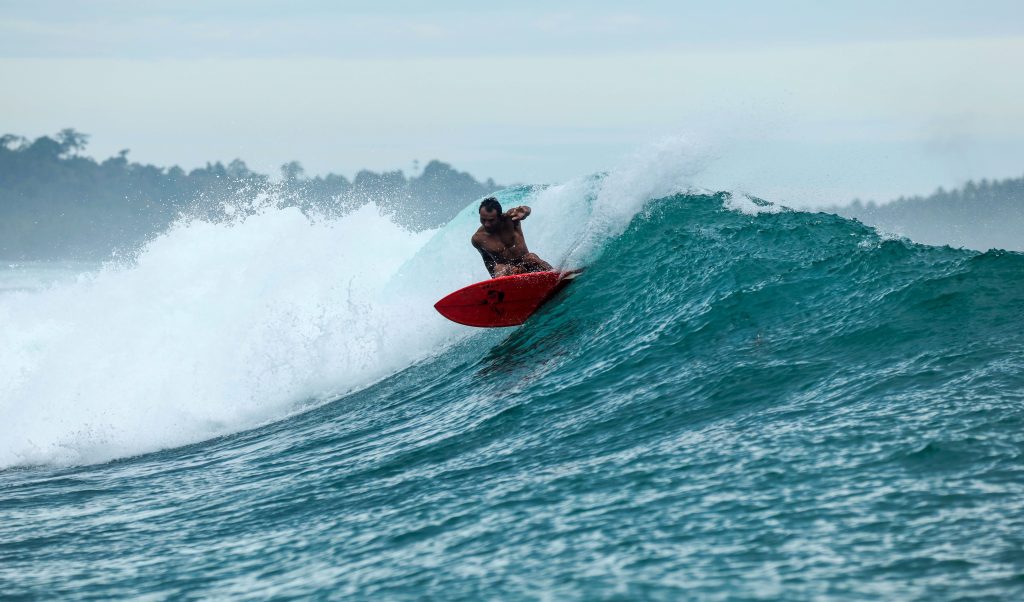
At the southern tip of the Bukit Peninsula, past even Uluwatu, sits a wave that demands something most of Bali’s breaks don’t: a genuinely hard walk just to reach the water. Green Bowl rewards that effort with one of the more consistent, powerful reef setups on the south coast — but it’s a spot that deserves real respect before you commit to the climb down.
Where Is Green Bowl, and How Do You Get There?
Green Bowl sits in Ungasan, at the southern edge of the Bukit Peninsula, a short drive past Uluwatu and the rest of the south coast’s better-known breaks. Locals know the beach as Pantai Pura Batu Pageh, named for the temple perched on the cliff above it. To get there, you’ll turn off toward Jalan Pura Batu Pageh and pay a small parking fee at the top of the cliff — and then comes the real challenge: a descent of more than 300 steep concrete steps cut into a roughly 75-meter limestone cliff face. There’s no shortcut here; an old resort elevator that once served the beach is long defunct, and the climb back up after a session is genuinely strenuous, especially in the heat.
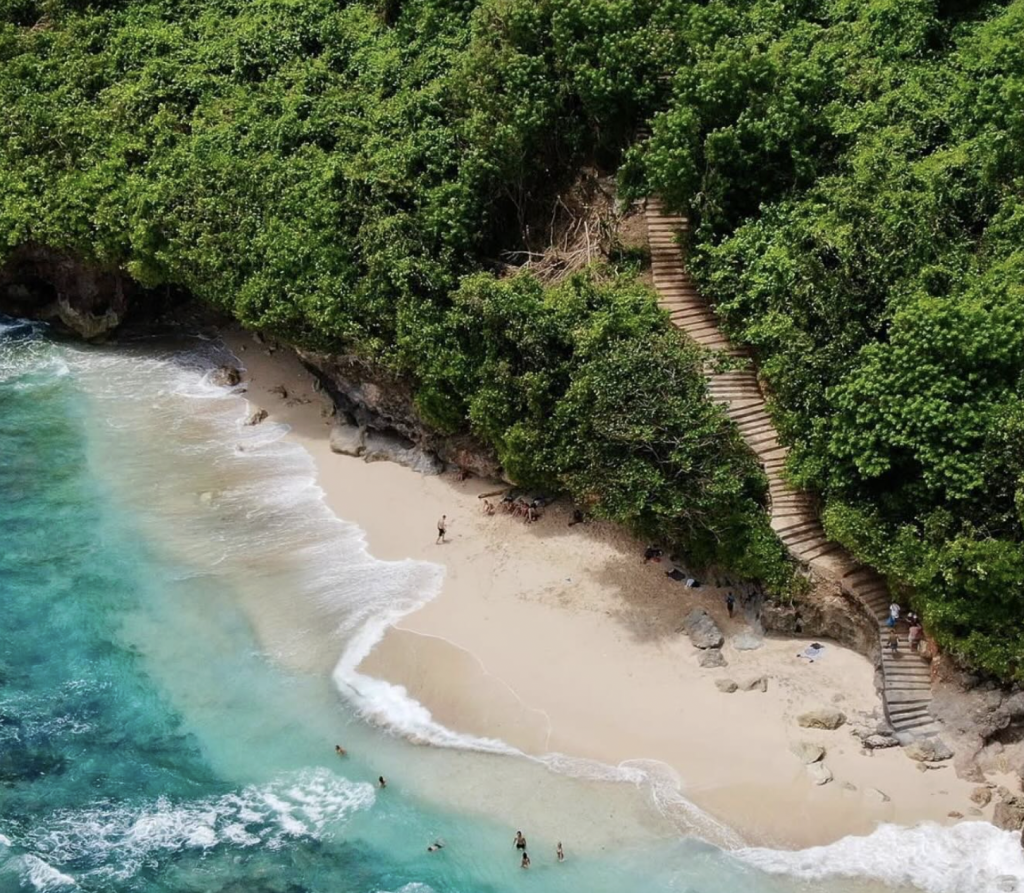
Image taken by: https://www.instagram.com/ksana_fedotova/
What you’ll find at the bottom makes the effort worthwhile: a striking white sand beach, limestone caves offering shade at the base of the cliff, and — depending on the tide — clear tide pools worth exploring. It’s also home to a resident troop of grey long-tailed macaques on the cliffside, generally more shy than their counterparts at Uluwatu, best left unfed and admired from a distance.
The Wave
Green Bowl holds real historical weight as the first surf spot discovered and ridden along this stretch of the south Bukit coastline. It’s a reef break offering both lefts and rights, curving along the reef into a well-defined channel. Because the reef here is exposed to swell from virtually any direction, Green Bowl tends to pick up more size than its neighbors — it’s often the go-to alternative when Uluwatu is too small, since the way swell wraps into this bay reliably delivers more push. The flip side is that it can just as easily get too big to surf comfortably.
This is squarely an advanced wave, suitable for intermediates only on the smallest of swell days. It’s not the place to test reef surfing for the first time.
Best Tide
Mid tide is the consensus sweet spot for actually surfing here, offering the best balance between wave shape and manageable current. Tide plays an outsized role at Green Bowl beyond just wave quality, though — at high tide, the path along the beach can flood and wash out, genuinely risking getting cut off or trapped, so it’s worth timing your session with an eye on the incoming tide rather than just the swell forecast. Low tide, by contrast, exposes more of the reef and reveals tide pools worth a look if you’re taking a break between sets, though the wave itself can lose some of its shape at the lowest stages.
Best Season
Like most of the Bukit Peninsula, Green Bowl runs on the dry season’s rhythm — roughly April through October, with June to August typically delivering the most consistent, well-overhead swell. It can still produce rideable waves outside that window, but the dry season remains the more reliable bet, in line with the rest of this coast.
The Current: Respect It Before You Paddle Out
This is the detail that matters most at Green Bowl. The channel here carries one of the stronger currents on this stretch of coast, capable of pulling a surfer — or a lost board — straight out to open ocean if you’re not paying attention to your position. If you do get caught in a rip here or anywhere else on a reef like this, the instinct to fight straight back toward shore is exactly the wrong move: paddling directly against a rip only exhausts you against water that’s moving faster than you can swim. Instead, paddle perpendicular to the current, cutting across toward the breaking peak, where incoming sets can actually help push you back toward shore rather than working against you. Currents also don’t move at a constant strength through a tidal cycle — they run fastest through the middle two hours of each six-hour tidal swing, so it’s worth being extra attentive to your position during those windows specifically.
Reef Safety
If you do wipe out over the reef here, resist the instinct to dive forward or drive your feet down toward the bottom. The safer technique — sometimes called the “starfish” — is to fall flat, landing on your belly or back with arms and legs spread to distribute the impact, protecting your head and neck with your arms until you resurface. Coral cuts are worth taking seriously too: coral carries a bacterial load that can turn even a small cut into a real infection if it’s not cleaned promptly, so rinse any wound thoroughly with clean water as soon as you’re out.
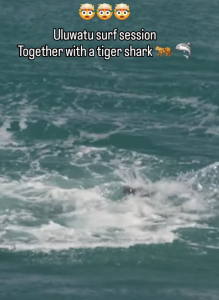
One more note worth a brief, calm mention: tiger shark sightings have occasionally been reported in this area. They’re genuinely rare, but it’s reasonable to stay a bit more alert in the channel and the deeper water beyond the reef, the same way you would at any exposed ocean point.
Crowds
Thanks to the demanding climb down, Green Bowl tends to be quieter than the Bukit’s more accessible hotspots — but don’t count on having it to yourself. On a good morning, particularly during smaller wet-season swells, it can still draw a solid crowd of surfers willing to make the trek.
Who Should Surf Here
This is a wave for confident, experienced reef surfers rather than anyone building their fundamentals. Between the strenuous access, the exposed swell, and the genuinely strong current in the channel, it rewards surfers who already know how to read a reef break and respect it — not a place to learn those lessons for the first time.
Beyond Surfing
Even if you’re sitting out a session, Green Bowl is worth the descent on its own. The caves offer welcome shade, the tide pools at lower tide are worth a slow explore, and the view back up at the cliffs from the beach is one of the more dramatic on this coast.
The Bottom Line
Green Bowl isn’t a spot you stumble into casually — the walk alone filters out anyone not genuinely committed to the session. For advanced surfers willing to make that climb and respect the current, it’s one of the more rewarding, historically significant waves on Bali’s south coast.
Thinking about tackling Green Bowl? Let us know your experience level and we’ll help you time a session around the safest tide and swell window.

Yosua is a surf enthusiast with over 5 years of chasing waves across Bali’s iconic coastlines. From West coast to East coast of Bali, he’s spent years exploring what makes Bali one of the world’s greatest surf destinations. Through Surf Journey Bali, Yosua shares honest guides, local tips, and surf travel insights to help both beginners and seasoned wave-riders make the most of their Bali surf experience.